
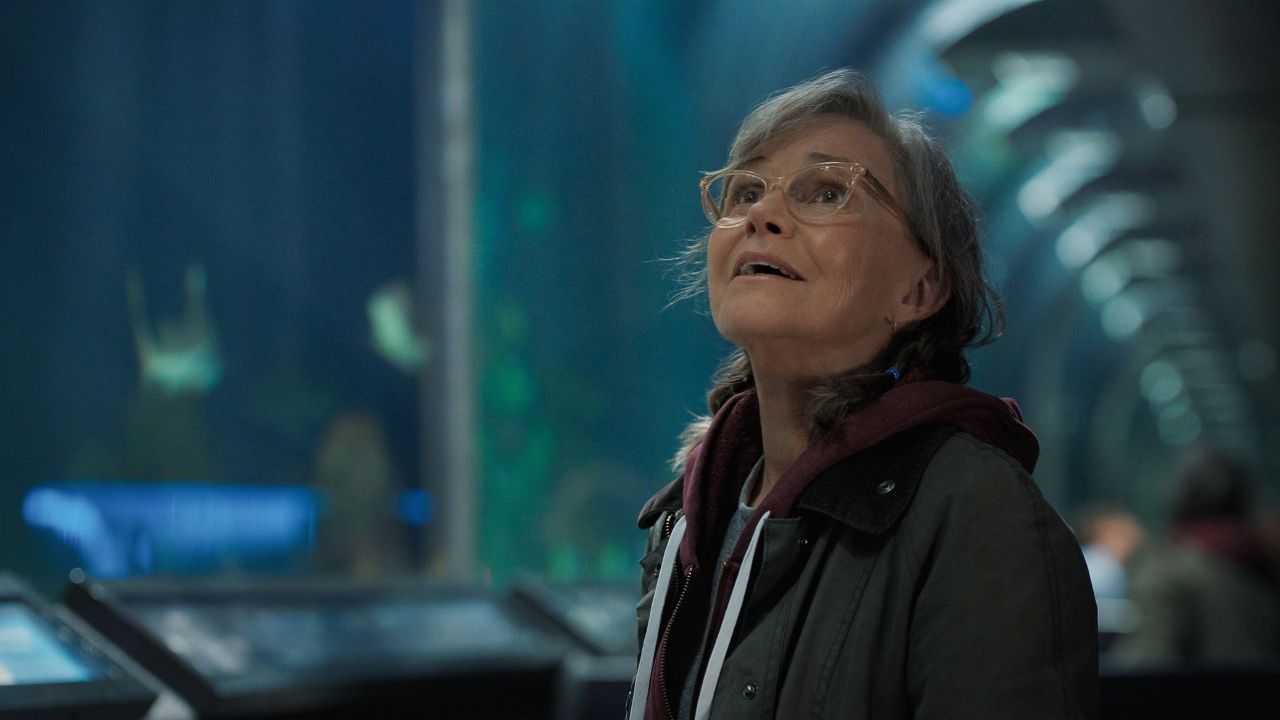
Remarkably Bright Creatures had me slightly worried. After I finished watching it on Netflix, I went online to check out the reviews. Pretty much everyone was gushing about how emotional, and moving, and touching the movie was – but I didn’t feel any of that. Don’t get me wrong, I enjoyed it on an intellectual level. So why didn’t I feel connected and moved by it? I’ve been thinking hard about that.
The film’s most unique aspect is that it’s narrated by a Giant Pacific Octopus named Marcellus (voiced by Alfred Molina). Once a free cephalopod, Marcellus was captured and now lives in a public aquarium. He mourns the loss of the ocean and grates at being held prisoner by an inferior species who gawk at him in his tank. Marcellus is the spirit animal of anyone who prefers their own company to the maddening crowd. They say hell is other people and I bet Marcellus would agree.
Like an eight-limbed David Attenborough, Marcellus observes his human captors. He grows fond of Tova, an elderly cleaning lady who, like Marcellus, prefers solitude to the company of her own species. When she gets injured and needs to train a young man named Cameron to replace her, Marcellus sees that the two bickering humans share more than either knows. Realising that Tova and Cameron are the keys to the other’s healing, Marcellus makes it his mission to connect them before he dies.
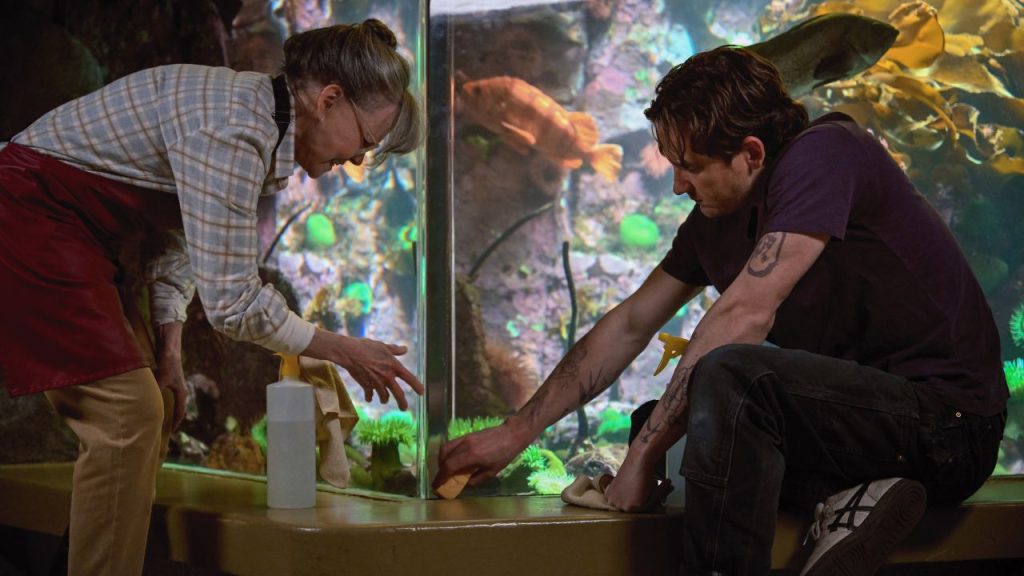
The performances were great. Sally Field as Tova is excellent (isn’t she always?). Tova is just the right balance of wise grandmother, pernickety mentor, softly mournful widow, and broken-hearted mother. Lewis Pullman pulls off Cameron well, without sliding into unseemly teenage angst (honestly, he’s too old to be called “the juvenile” by Marcellus). And Alfred Molina as Marcellus has likely found his best role since Doc Ock.
Now, I really like the heavy and hard-hitting stuff, especially when it comes to loss and grief. For me, The Leftovers and the Buffy episode “The Body” are peak television when it comest to sorrow and loss. But I acknowledge that not everyone gravitates towards such visceral and painful stories. I also recognise that’s what makes Remarkably Bright Creatures special and important.
It’s a light, gentle movie that admittedly feels like something Lifetime would make rather than Netflix. At its heart is a simple story about loss, but also about finding healing and love – not just romantic love, which seems to be the only kind Hollywood knows and finds commercially viable, but love in other forms: love for one’s community, love across generations, across species.
It’s a positive sign that a major streamer like Netflix would commission and support films like Remarkably Bright Creatures, which was based on the novel of the same name by Shelby Van Pelt. These days it seems that the only thing on our screens are images of pain and loss, all dialled up to 11. Maybe that’s why the cosy subgenre has been enjoying a boom. We’re seeing a real interest in cosy mysteries, cosy fantasy, even cosy horror.
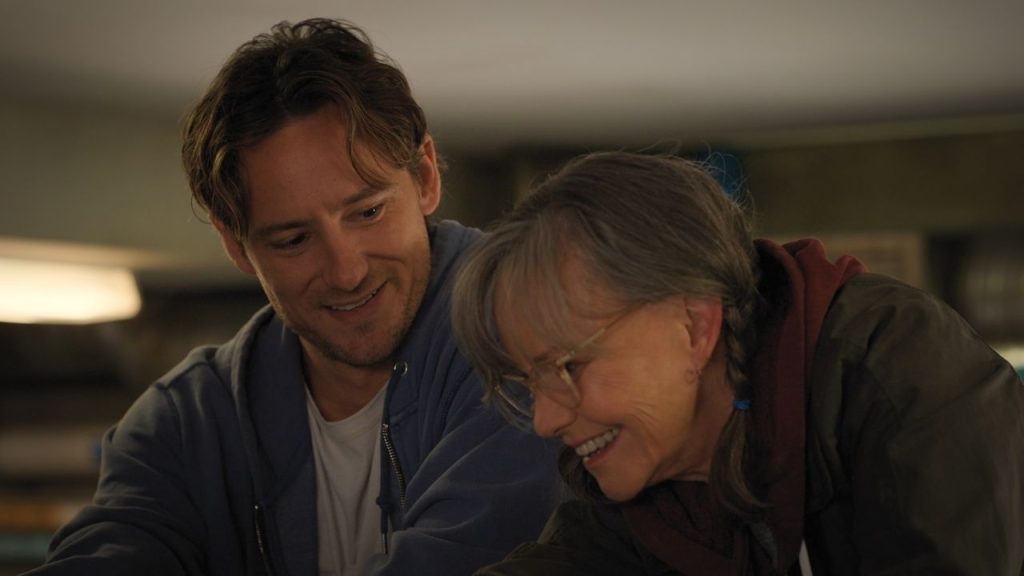
So it’s unsurprising that a quiet story about an elderly lady and a young man seeking connection is just the palate cleanser people are craving. Remarkably Bright Creatures offers a cosy drama that’s high on warmth and low on drama. It may deal with the grief of child loss and parental abandonment, and it may be told through the eyes of a cynical octopus, but at its core is a deep humanity.
At the end of the day, it doesn’t really matter that Remarkably Bright Creatures didn’t resonate with me emotionally in quite the same way that it did with so many others. I appreciate that this movie exists, that it offers comfort, even catharsis, to those who connected to it. And it was a good reminder that we are all more closely connected than we could ever have imagined.








Follow Us