
In my day job, I had to relearn a lot of what I thought I already knew. The scaffolding of the law looks so logical from the outside, until you’re inside it and realise the whole system is held together by oxymorons, polysemies, and the occasional 14-day work streak in an office far less flashy than anything on television. I’ve come to appreciate the law in a way I didn’t before. Tak kenal maka tak cinta, as the Malay saying goes: you don’t love it until you know it. And knowing it means seeing the beauty and the rot.
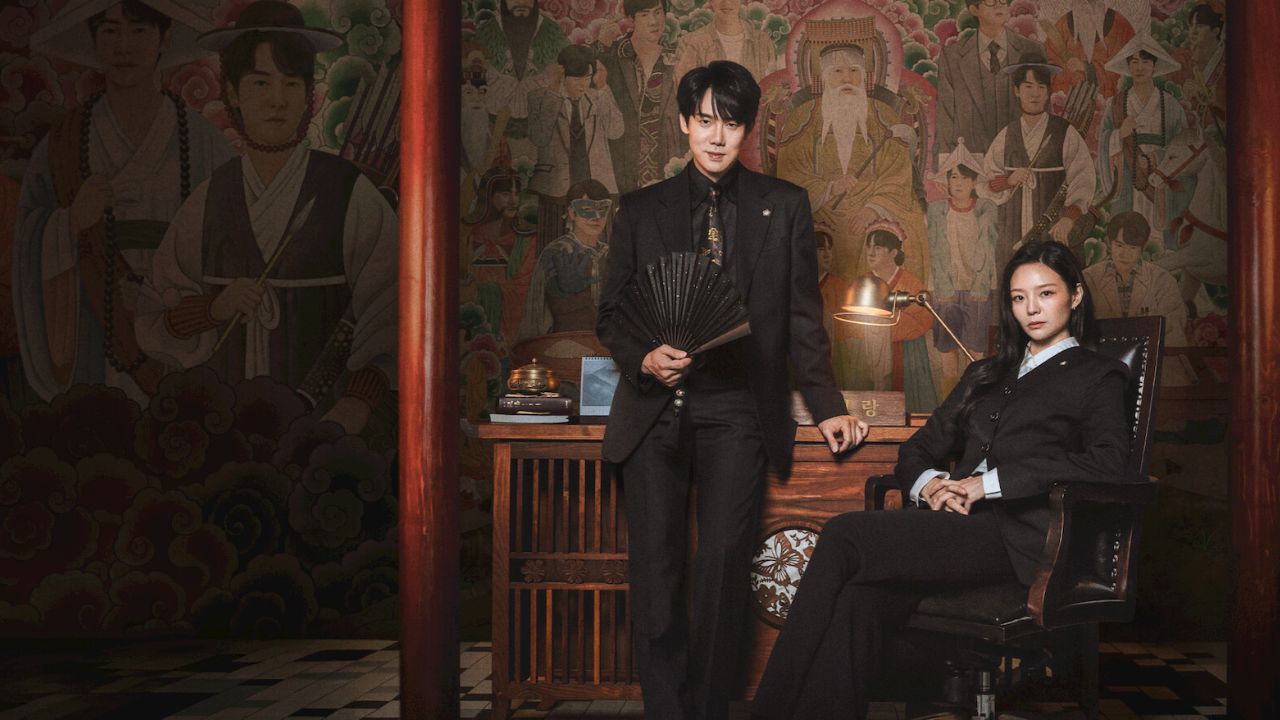
Shin Yi-rang (Yoo Yeon-seok) is a timid lawyer no firm in Seoul will hire, because his late father was a disgraced prosecutor. He rents a cheap office that used to belong to a shaman, lights some incense, and suddenly he can see dead people. The dead want justice.
So when I sat down for SBS’s new supernatural legal drama, two questions were rattling around my skull. First: how often have we wished we could talk to the dead, just to ask them the questions only they can answer? Second, and more importantly: ghosts, like humans, aren’t bound by any oath. They can be wrong without knowing it. They can also lie.
That second question is the crack in the foundation of Phantom Lawyer, and the show never quite dares to explore it.
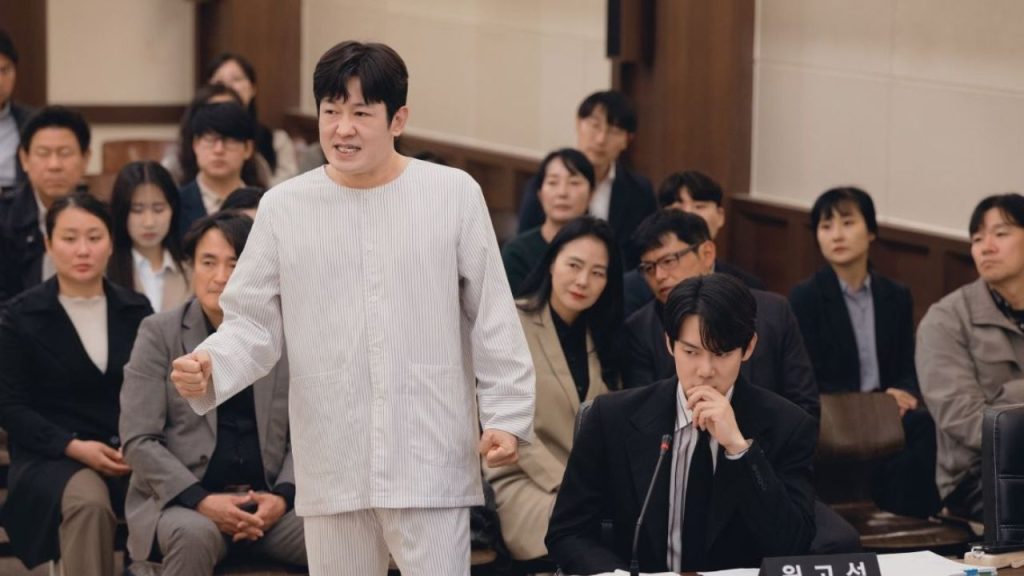
Yoo Yeon-seok is the entire show, and he is doing work. Every possession is a wholesale physical transformation: gangster one minute, teenage idol trainee nailing K-pop choreography the next. The editing in these sequences is clever, cutting just before you expect it, and Yoo’s body language does the shifting instead of VFX trickery. This is camp performance as high art, and it’s why the show works as well as it does.
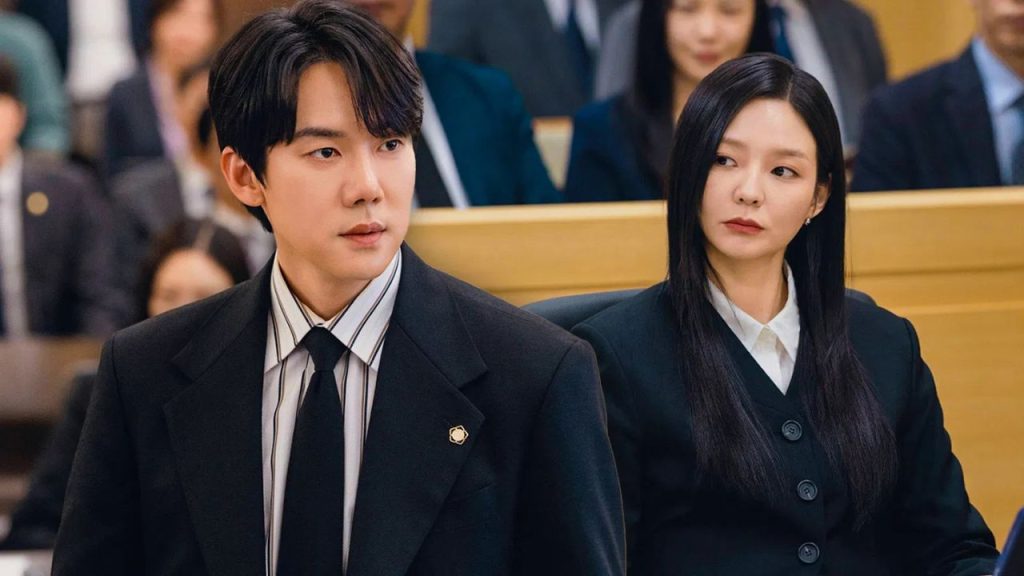
Esom’s Han Na-hyeon is the cold, undefeated elite attorney who operates strictly within the law’s parameters. She dismisses Yi-rang’s ghost-seeing as delusion and only comes round after losing to him and witnessing the inexplicable firsthand. “A ghost’s memory is like a photograph left in the rain,” Yi-rang explains. “It’s blurred, but the colours of the pain are still vivid.” That’s why he needs her. He gets the emotional residue; she supplies the forensic architecture: the hard drives, the paper trails, the witness statements, the procedural rigour that turns a ghost’s blurred ache into something a court will accept. Her arc is the show’s corrective to its own gimmick, the reminder that a dead person’s pain is not evidence, and that someone has to do the boring, jurisdiction-bound work of making it admissible.
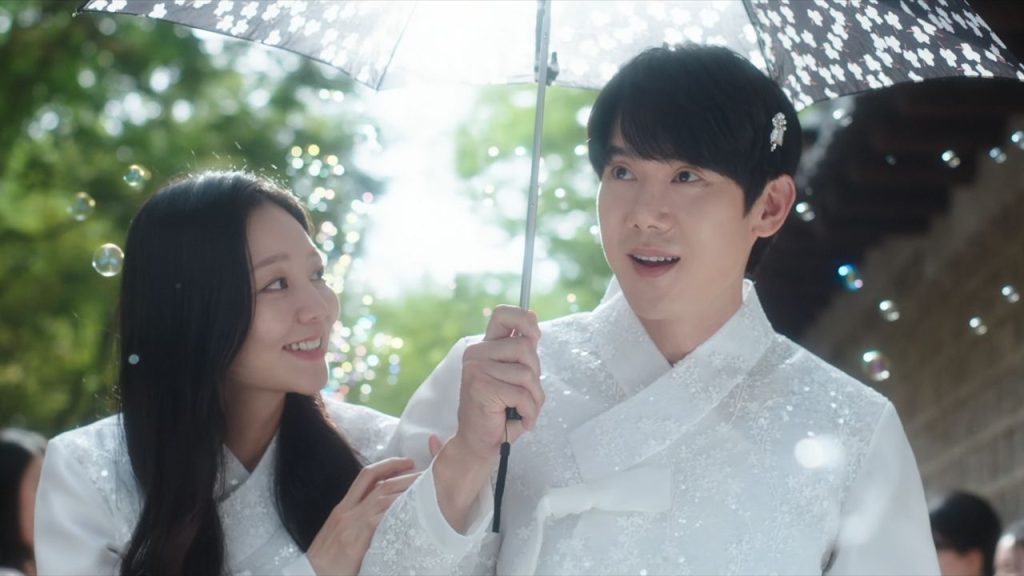
Like Na-hyeon, the show rarely lingers on emotional weight, which is both its strength and its limitation. The courtroom scenes are shot with competent efficiency rather than flair. The spectral clients get a soft-focus, slightly desaturated treatment that works in close-up and grows monotonous across sixteen episodes. The ghosts also look like me on most Wednesdays, down to the eyebags and pale-blue complexion. They’re sad, not scary, which is fine, because the show isn’t horror.
That visual conservatism, clean, bright and SBS-standard, works against the show’s more subversive impulses. It’s a story that brushes against the instability of truth, told through a visual rulebook that never wobbles once.
The pacing is the show’s secret weapon and its flaw. The case-of-the-week structure, roughly two episodes per ghost, keeps things compact and bingeable. Nothing drags, but nothing builds either. The central mystery lurks in the background for most of the run, then resolves in about an episode and a half near the end. For a storyline that’s been looming since episode one, it lands with a thud. The final family dinner tries to pull everything together emotionally, and the execution falls short.
Filial piety is a recurring theme, and the script leans too hard into idealism; some emotional beats feel surface-level rather than earned. For a show that’s otherwise sharp about human desire (“What’s scarier than ghosts is human desire,” Yi-rang says at one point, and it’s the best line in the show), the family drama often feels like it’s going through the motions.
Which brings me back to the crack. The show sets its rules up well: the spirits don’t know who they are or how they died until something “unlocks” it, and that innocence holds the premise together. Memory, the show admits, can blur. What it never admits is that a ghost might deceive. Its whole emotional architecture rests on that unexamined assumption: that spectral testimony is, if not admissible, at least sincere. Ghosts are victims seeking closure, and their memories are the raw material from which Yi-rang reconstructs the truth.
But there’s more than one truth in any case: what happened, what the ghost remembers happening, and what the ghost wants to have happened. Memory is reconstructive and trauma distorts. And if consciousness persists after death, why would it persist honestly? Why wouldn’t a ghost lie to secure a better outcome for the family they left behind? Why wouldn’t a ghost lie simply because they were a liar in life? The show flirts with this in episode three, when a trainee idol’s ghost asks, “Are we sure I’m dead?”, but it’s a tease, not an interrogation. The show is too busy being charming.
Phantom Lawyer knows its jurisdiction. The law is about parameters, and so is genre. The show stays inside its own and never oversteps into the questions a lawyer, a psychologist, or a philosopher would ask. That’s a choice, and it costs the show depth. It also means the ghosts stay pale, blue, and conveniently honest.
What you see is what you get. Phantom Lawyer is entertaining, and alongside Sell Your Haunted House (2021), it makes a case for the white-collar supernatural procedural as a genre I’d like to see more of.

Follow Us