
Dear Connections.
Over some delicious KBBQ, I distinctly remember my friends talking about how desperate they are for internships over the summer break. One of them even said, “Gosh, I’d kill for an internship right now.” Rather than travelling the world, and learning from lived experiences, young people, it seems, would prefer work placements. When rebutted, it is always the same response: “I have no other choice.”
I recently had the pleasure of catching Park Chan Wook’s newest feature, No Other Choice on the big screen, and it took what my friend was saying about “killing for a job” to a whole new level.
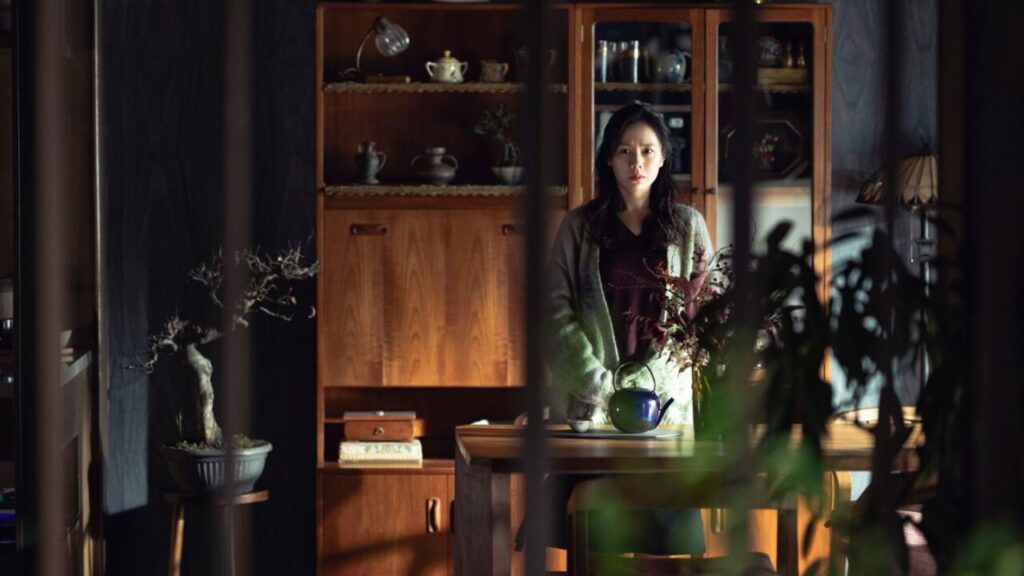
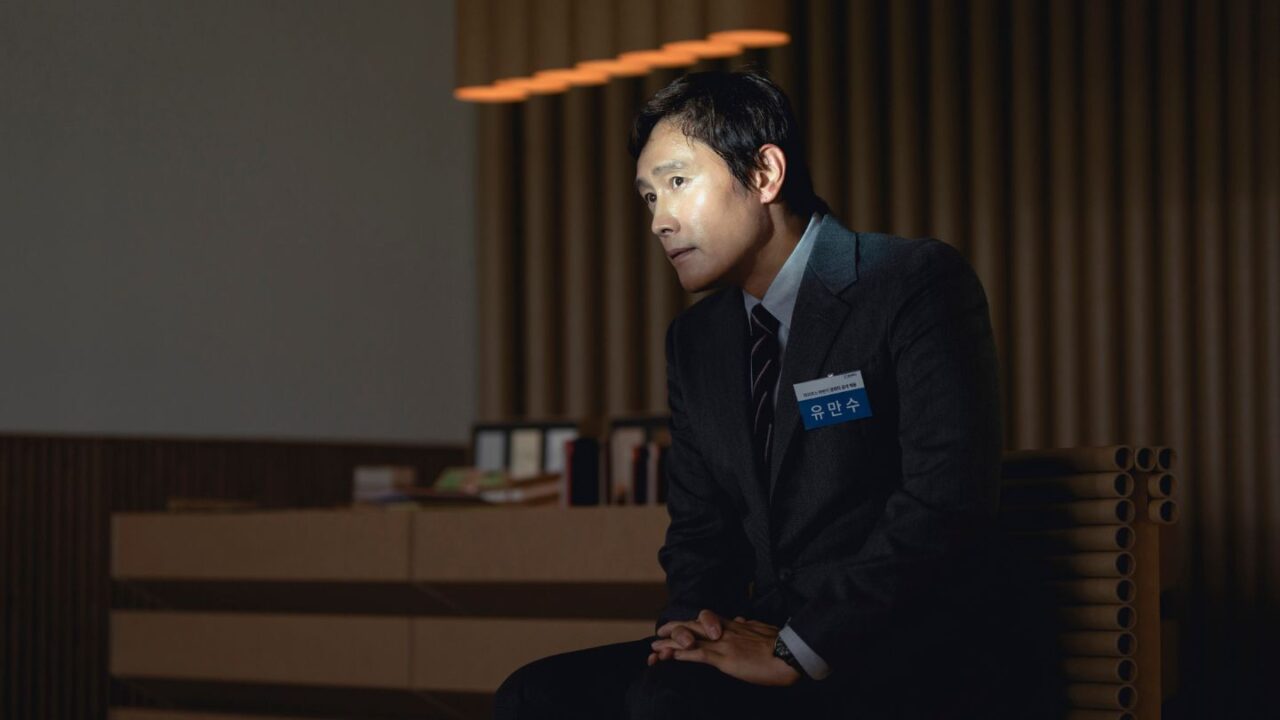
No Other Choice follows Man-Soo (played by the incredible Lee Byung-Hun) who loses his job at a paper company in which he has served for 25 years following an American takeover. The film opens with him at a family barbeque. The company had given him a box of expensive eels (as a “token of appreciation” for his hard work), signaling his imminent “axing”. At this point in time, he has it all: a wife who loves him (a professional tennis mom), a son from her previous marriage, a cello prodigy daughter, and two cute Golden Retrievers. As the family spirals into financial turmoil, Man-Soo’s wife goes back to work as a dental hygienist, the Goldens are sent to the in-laws, and most horrifically, their Netflix subscription gets cancelled.
This is exactly the kind of absurdist humor that is both deeply relatable and a hallmark of Park Chan Wook. The Fordian Conveyor of America’s industrial complex rolls in, snatches away livelihoods, and yet it is the American streamer that gets cancelled. It is in this kind of sardonic irony that Park flexes his auteur status: he perfectly balances the screwball comedy of a man confounded by his delusions and driven by pure desperation that he resorts to murder to eliminate his competition, with the commentary of the current state of the job markets, where survival feels less of a right and more of an act of violence.
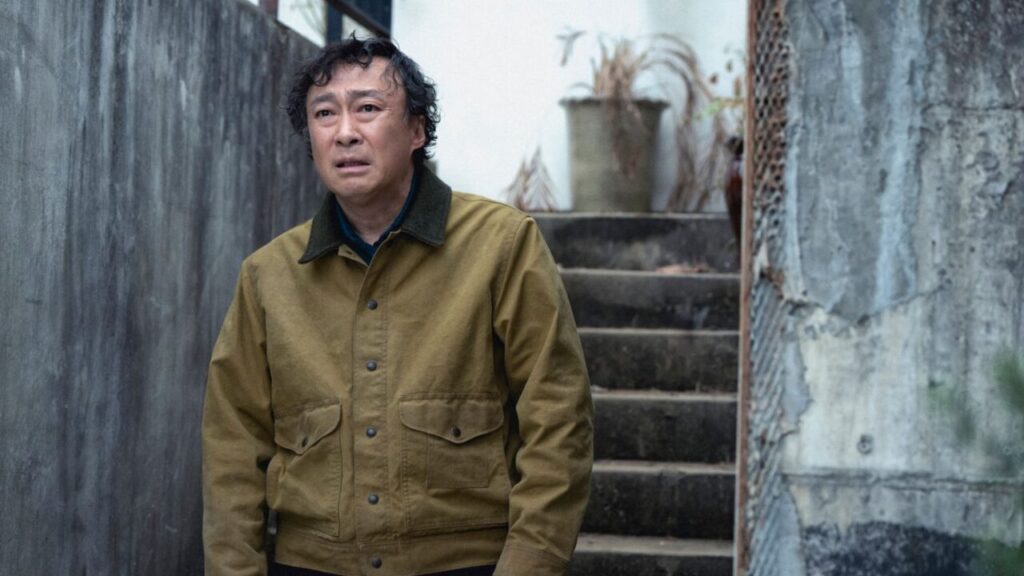
What follows is then the odyssey of a man who will go to any length to secure a job at a new paper company. Through some ingenious methodology, he narrows down his competitors and sets off on a clumsy, homicidal journey to reclaim his status as the family’s breadwinner (further accentuated by a support group of unemployed middle aged men reaffirming themselves that they aren’t failures.) While the film attacks capitalism with the same wit and slapstick comedy as seen in Parasite, it exists more as a spiritual successor, than something derivative.
I reflected on the possible Parasite parallels (as the possibility will always be there) but in this film, the family is never poor. They are a comfortable, middle class family. Even as Min-Soo loses his job, their kids still are provided for. Park reframes the inherent horror that drives Min-Soo as the threat of downwards mobility.
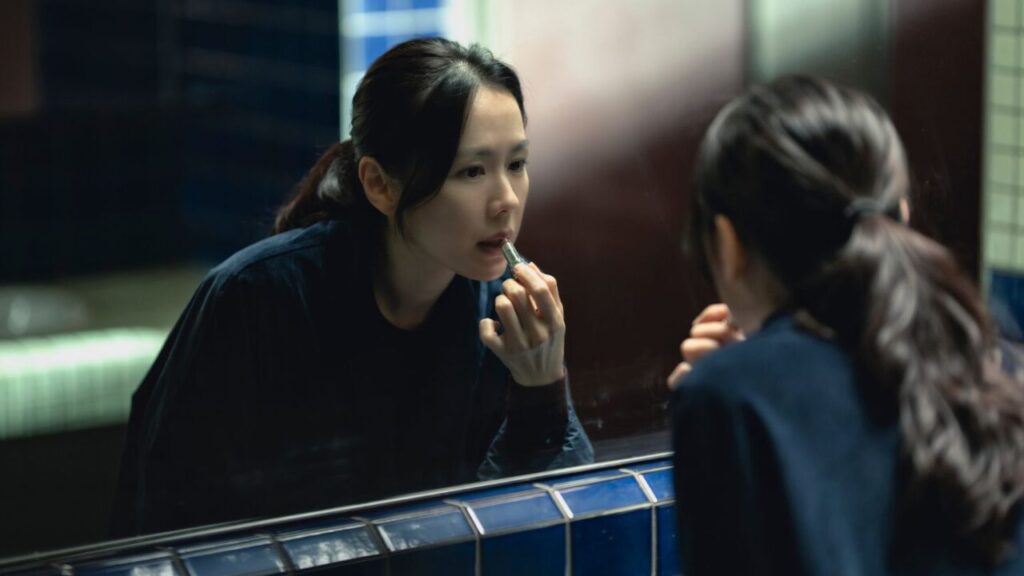
On a technical level, this film is everything great about Park Chan Wook’s work and more. The camera breathes with a life of its own, and matches the frantic, kinetic energy of our protagonist. It twists, and turns, and moves in ways you’d never think a camera could. The writing is sharp and furnished, and its laser-sharp accuracy unravels with a chaotic pace that complements the protagonist beautifully.
I really liked how this film didn’t take itself too seriously. Heck, I didn’t even know it was going to be a comedy!
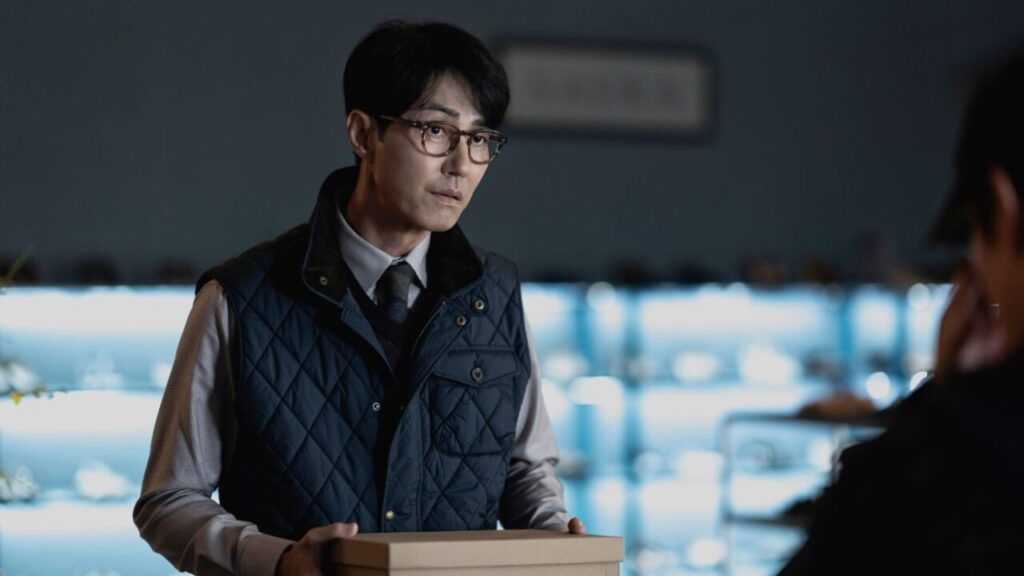
Key Takeaways From This Experience ✅
- Let the camera do the talking. There is a scene of Man-Soo drinking a pint of beer with a shot glass in it, and we see the shot from the inside of the glass, which was insanely cool.
- Your. (job) Transitions. Matter. Park forgoes the typical fade in or sharp cuts. Instead, he seamlessly transitions the scene from two completely separate planes. It may feel jarring, but never in a bad way.
- Music choices are important too. There is an extremely hilarious sequence set against this 80s song called Red Dragonfly that left me with a huge smile on my face. It was set against Man-Soo’s first murder attempt.
- Always use Linkedin. Maybe Man-Soo wouldn’t have to resort to murder if he had an #OpenToWork frame around his profile picture.
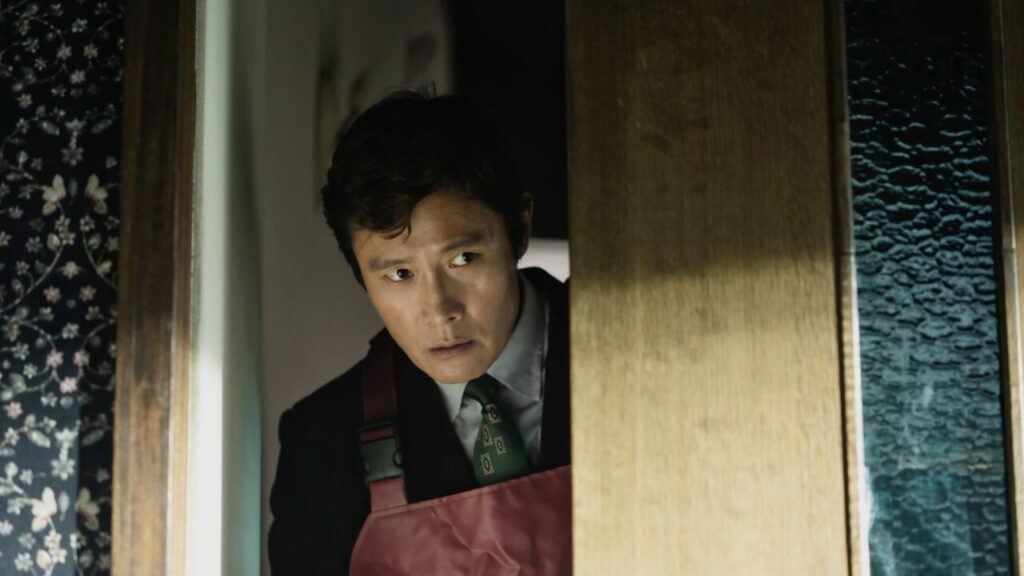
Ultimately, the film works so well because of the current state of the world. There is nothing more societally valuable than a high-paying job or a big corporate title. There seems to be an inextricable conflation of our jobs and our identities, of what we do and who we are, that when the time comes that we have to move with the tides, we are caught up in our own delirium – we convince ourselves that we have no other choice.
Park Chan Wook brilliantly crafts a story that is not only hilarious, thrilling, and deeply moving, but also an existential fable on obsolescence, and how we may continue to serve systems that have long stopped serving us. Please don’t kill your coworkers.
#CareerResilience #97thPost #CareerGrowth #Leadership #FilmReview #FutureOfWork #ParkChanWorks

Follow Us