
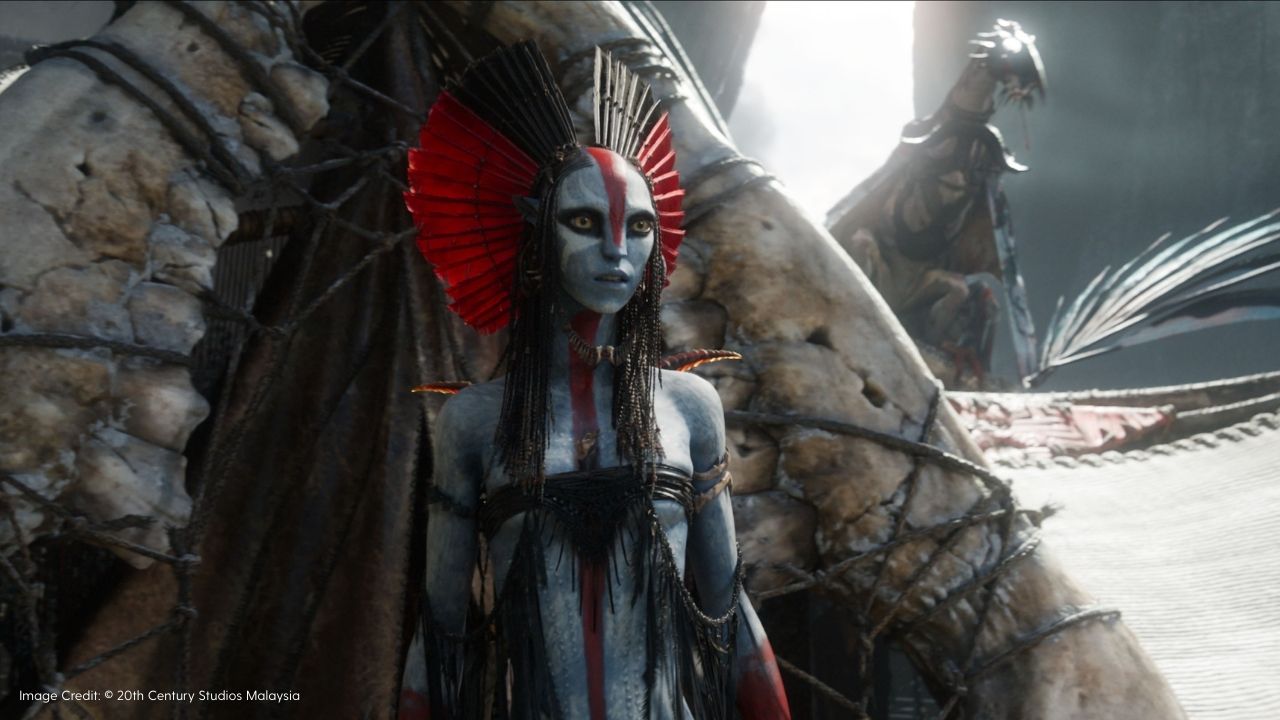
There has always been a certain scepticism surrounding the Avatar franchise. For all its box-office dominance and cultural ubiquity, there remains a persistent assumption among some viewers that these movies are “just” visual spectacles, endlessly repeating the same themes and story beats. It’s a refrain we’re hearing again with this one. And we couldn’t disagree more. Avatar: Fire and Ash is not Avatar: The Way of Water all over again. It is neither a retread nor a remix. It is, instead, the narrative and thematic combustion that the series has been building toward. It is an urgent, emotionally charged, and surprisingly intimate climax that reframes everything that came before it.
Where The Way of Water was expansive and exploratory – introducing new tribes, ecosystems, and the rhythms of life on the Pandoran oceans – Fire and Ash is confrontational. This one is all volatility, fracture, and consequence. The movie pulses with the tension of a world that can no longer pretend its crises are distant.
James Cameron isn’t just repeating the environmental immersion of Part 2. The shift from water to fire isn’t just elemental symbolism. It’s structural. If the second film was about adaptation – it was the Sullys learning about new ways and new cultures, it was them coming to terms with new environments – this one is about transformation through pressure and heat.
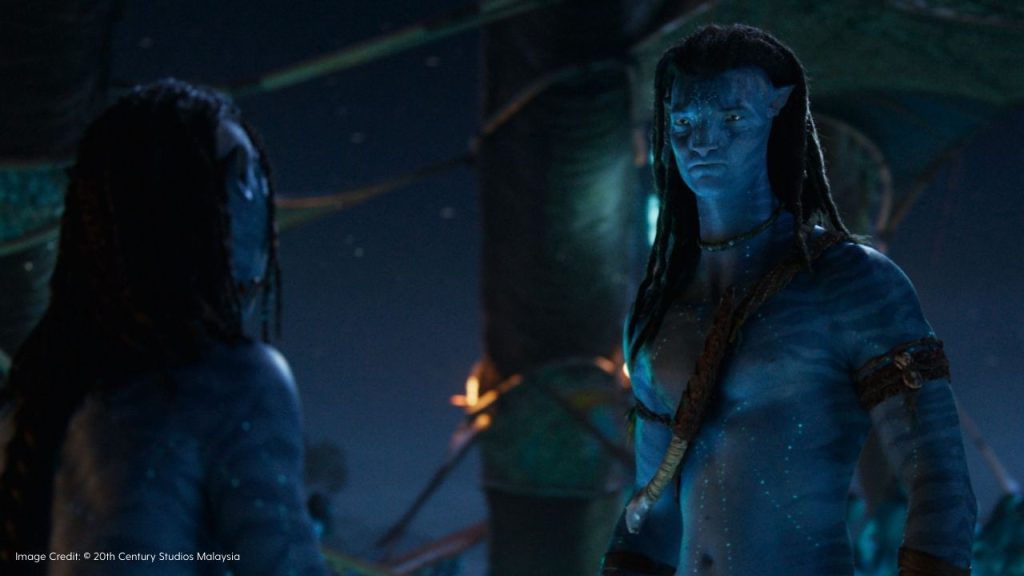
One of the clearest signs this isn’t a rehash lies in how it handles the Sully family. In Avatar: The Way of Water, Jake and Neytiri were parents trying to relocate and protect their children. Their arc was defensive. In Fire and Ash, that protection becomes insufficient. The family unit fractures under grief, guilt, divided loyalties, and the inevitability of growing up in a world at war. Cameron pushes these characters into far more complicated emotional territory, particularly with Lo’ak stepping into a position that finally crystallises his trajectory from misfit to leader. The movie’s emotional centre of gravity also shifts, decentralising Jake in favour of the children – particularly Lo’ak and Kiri – whose experiences represent the generational consequences of colonial conflict. Cameron isn’t repeating the arc; he’s advancing it.
The villainy evolves as well. Quaritch – already the most interesting resurrected antagonist in blockbuster cinema – becomes something closer to a tragic figure. In The Way of Water, he was a shadow, echoing a past Jake had tried to escape. In Fire and Ash, he becomes a mirror. The film interrogates the cost of vengeance, the disintegration of identity, and the unsettling question of whether a cloned memory can choose differently from the man who birthed it. The conflict between Quaritch and the Sullys gains layers, culminating in a resolution that feels both inevitable and unexpectedly personal.
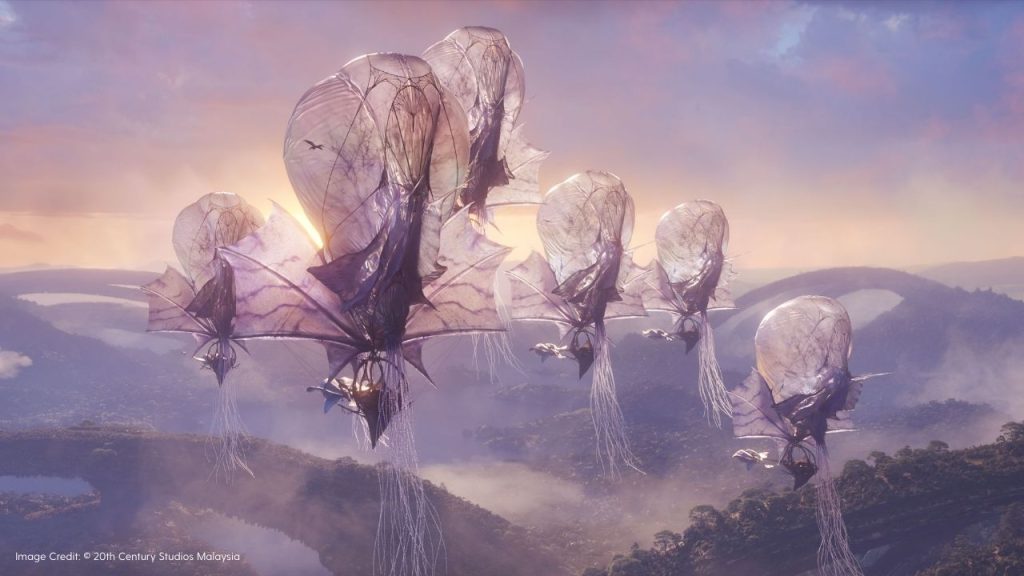
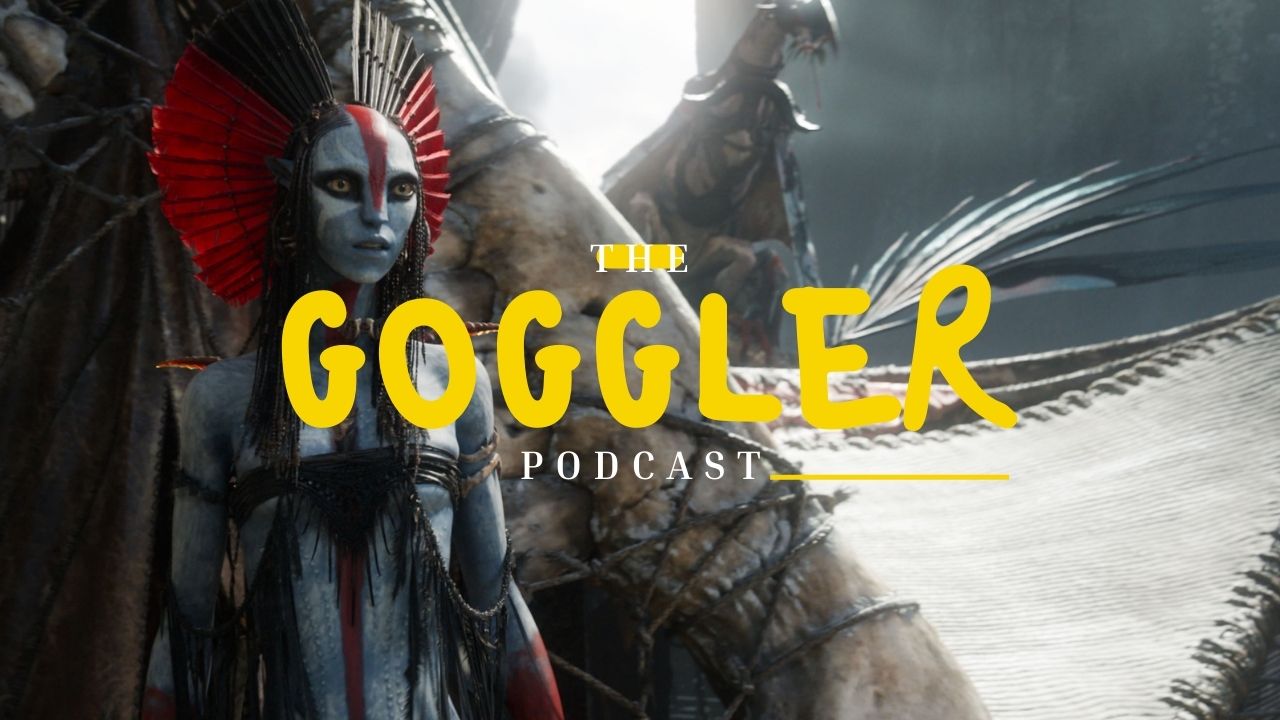
Visually and technologically, Fire and Ash also forges new ground. Cameron doesn’t simply double down on the aquatic world-building of Part 2. Instead, he uses fire, heat distortion, volcanic geography, and new tribal cultures to expand the cinematic language of Pandora. The Ash People are not just another bioluminescent spectacle; they are a cultural and ideological counterpoint to the Metkayina, complicating the simplistic binaries of “good Na’vi vs bad humans.” Their worldview introduces moral ambiguity that the series has long teased but never fully explored.
But what ultimately makes Fire and Ash the perfect conclusion to the trilogy is its sense of narrative closure without thematic finality. It resolves the emotional arcs of the Sully family, particularly Jake and Lo’ak, while leaving the broader universe open for future chapters. Cameron smartly anchors the climax not in the fate of a planet, but in the fate of a family.
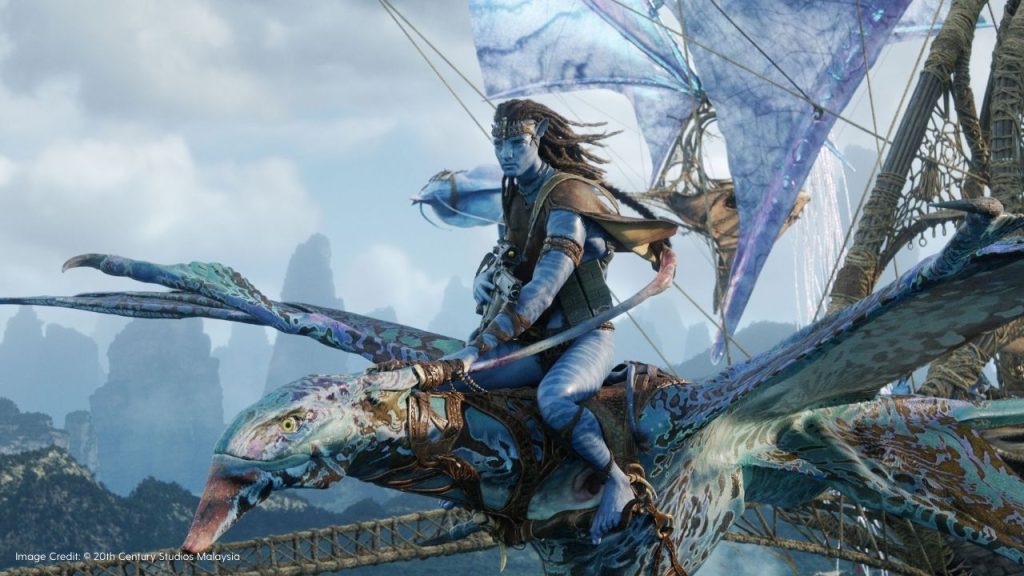
By the time the final sequence unfolds, it becomes clear why this trilogy works. This is not a cycle of repetition. It is a progression of elemental, emotional, and thematic states. Land, water, fire. Survival, adaptation, transformation. Jake Sully’s journey comes full circle not because Cameron repeats himself, but because he finally allows the character, and the audience, to confront what all this fighting has been for.
Avatar: Fire and Ash proves that the Avatar trilogy was never about spectacle alone. It was about evolution – of a world, of a family, and of a filmmaker pushing the limits of what blockbuster storytelling can achieve.





Follow Us