
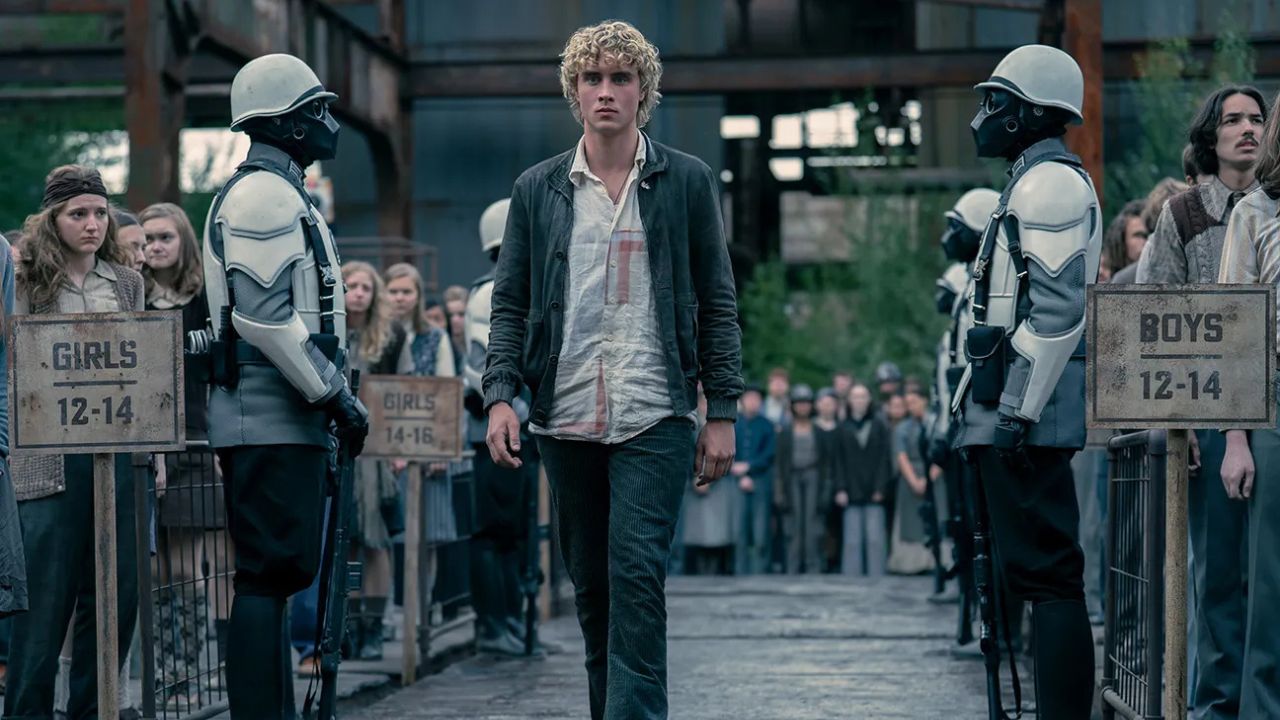
When the District 12 tributes sit down to watch the recap of their own reaping in Sunrise on the Reaping, something is missing. Woodbine Chance, the boy whose name was drawn first, ran and was gunned down in the square. On screen, he never existed. The footage now shows Haymitch Abernathy as the Capitol’s first and only choice. What you see is what you don’t get.
The Hunger Games has always been about television as an instrument of state power. Suzanne Collins has said the idea came to her while flipping between reality TV and footage of the Iraq war, and the Games fuse the two: children killing each other as prime-time entertainment, with viewing mandatory for everyone in Panem. The Capitol has always shown it can make you watch anything. Sunrise on the Reaping adds a darker lesson. It can also make sure you see nothing.

Michel Foucault is useful here. In Discipline and Punish, he describes how states once executed criminals on the scaffold in the town square, putting their power over life and death on public display. Then they stopped. The spectacle had become a liability, since crowds sometimes sided with the condemned and turned the execution into a riot. Power moved out of sight, into prisons, records and surveillance. It learned to work by controlling what people get to see.
That is the Capitol of this film, and its control starts at the reaping. When Haymitch’s family embrace him in tears, Plutarch Heavensbee, the Capitol’s media fixer, breaks them up and orders a re-shoot of the farewell with better angles. If that sounds far-fetched, remember that Kris Humphries’s proposal to Kim Kardashian was re-shot for the cameras, as a Keeping Up with the Kardashians producer admitted under oath. Grief becomes raw footage, to be cut into whatever shape the Gamemakers want.

The stakes rise at the Tribute Parade. The chariots crash, and Haymitch’s district partner Louella dies in front of the crowd. Haymitch pleads for help and nobody moves. So he turns to President Snow and slow claps, condemning the Capitol and Snow’s inaction in one gesture. Later he learns the moment will never air. Had it been broadcast, the boy who clapped might have become the symbol of resistance Katniss would one day be. The Capitol made sure he didn’t.
Snow is open about how this works. In a strangely intimate scene, he tells Haymitch he once mentored District 12’s first victor, Lucy Gray, and asks whether people back home still remember her. Haymitch has never heard of her. As far as he knows, nobody from 12 has ever won. Snow didn’t need to destroy the record of her victory. He only needed to stop showing it.
The erasure follows Haymitch out of the arena. He wins, and the punishment continues. In his post-Games interview, Caesar Flickerman rolls heavily edited footage of Haymitch betraying and abandoning his fellow tributes, then mocks him for hypocrisy. Haymitch has no way to answer. The Capitol has decided he is the worst victor the Games have produced, and it owns the only tape.
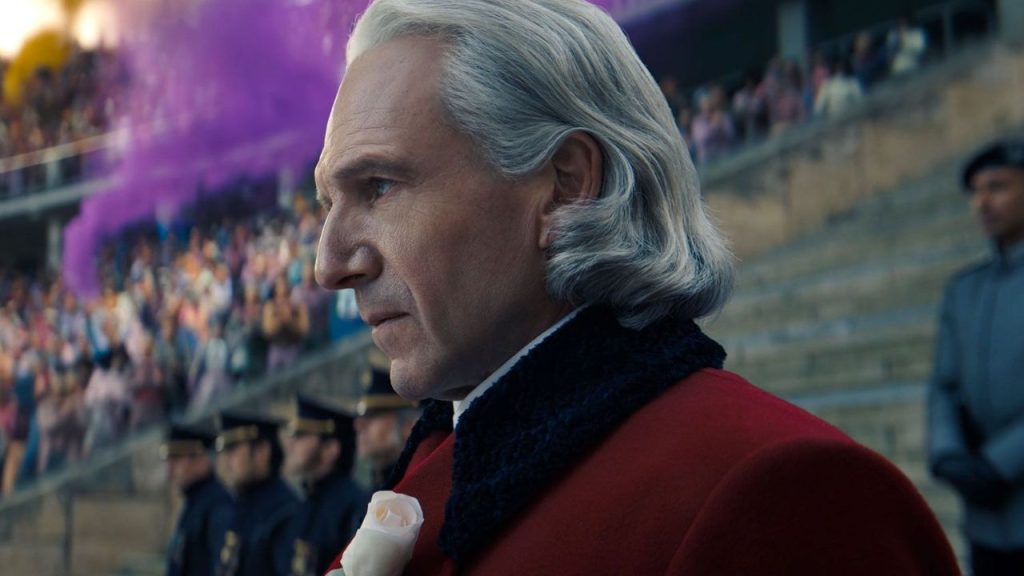
Nothing he did in the arena that mattered makes it to air. If nobody sees it, did it happen? The scaffold made the condemned visible so their deaths would announce the state’s power. Haymitch gets the inverse. He survives, and the Capitol exerts its power by choosing how little of him the country is allowed to see.
Haymitch goes home a victor with a story nobody will believe, because the only version anyone saw belongs to the Capitol. Twenty-four years later, a girl from his district will survive by learning to play to the cameras. Sunrise on the Reaping shows us why she had to.







Follow Us