
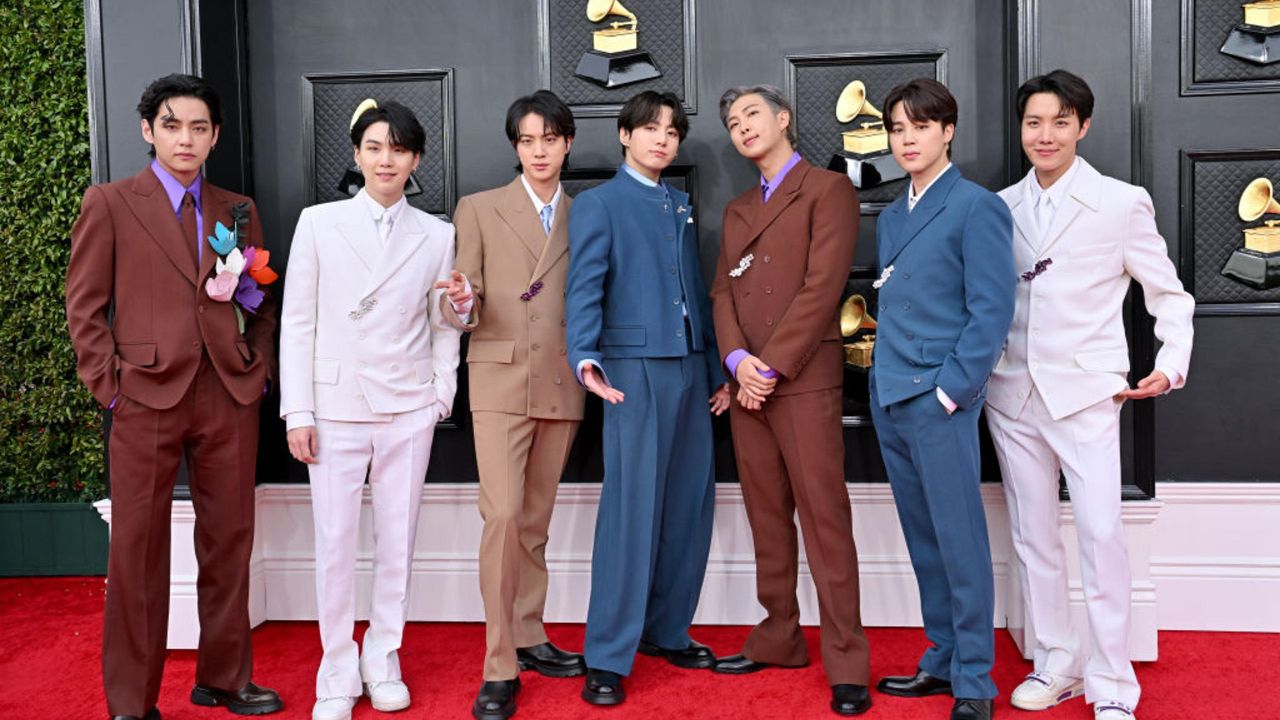
On July 29, one of the biggest groups in the world declined to enter the biggest award in music. BTS announced they would not be submitting ARIRANG for Grammy consideration this year — not over a snub, not over a loss, but over a category that was created, supposedly, for them. Artists at their level don’t usually make this move. Awards are something performers spend entire careers reaching for, and BTS has five nominations across three ceremonies without a single win. Walking away from a sixth is not a small thing.
In June, the Recording Academy announced five new categories for the 69th Grammy Awards, among them Best Asian Pop Music Performance. The category “recognizes artistic excellence in Asian pop music performances originating from or widely recognized within Asian markets, including but not limited to K-pop, J-pop and C-pop, with meaningful use of one or more Asian languages.” The rulebook is more specific than the announcement was: an Asian language must play a significant role in the song “such that the recording is identifiable with that language,” and incidental use — isolated words, adlibs, brief phrases — does not qualify. That language clause is the whole problem, and it’s worth being precise about why.

It’s tempting to say BTS was locked out of the category they inspired. That isn’t quite what happened, and the truth is worse. ARIRANG’s Korean-language tracks would qualify. “SWIM,” the English-language lead single and by far the album’s biggest commercial performer, would not. So the Academy has built a system in which a Korean group’s most globally successful song is too English for the Asian category, while the group itself has spent years being too Korean for the general ones. Pick a lane, the rule says. Then it moves the lane.
Harvey Mason jr., the Academy’s CEO, has an answer for this. He says the category was created “to celebrate the depth, diversity and extraordinary growth of pop artistry coming out of Asia,” and that “more categories mean more artists’ work is recognized. It’s never to divide, but to expand who is recognized.” He’s right that nothing in the rules bars an Asian pop song from the general categories. He’s also describing a system that has never behaved the way he says it does. The general categories were always open. Openness was never the constraint — voters are. What a dedicated category changes isn’t eligibility but incentive: it gives a voter who wants to acknowledge K-Pop somewhere cheap to put that vote, and a reason not to spend one where it would actually cost something.
We’ve seen how this goes. Best African Music Performance debuted at the 2024 Grammys and was met with the same mix of enthusiasm and unease. Critics called it reductive — an entire continent of musical traditions compressed into one trophy, with a first-year field drawn almost entirely from Nigeria and South Africa. Three ceremonies later, the names have barely moved. Tyla won the inaugural award for “Water” and won it again in 2026, beating Davido, Burna Boy, and Ayra Starr, the same artists who have been circling the category since it opened.
To be fair, the category did actually do something. “Water” broke Tyla globally, and that visibility was real. But visibility for five artists is not recognition of a region. It doesn’t feel like a celebration of an entire continent if you’re only ever celebrating the same five people. And the Asian category is built on a wider base — K-Pop, J-Pop, C-Pop, and whatever else “Asian markets” is meant to hold — which makes the compression more severe, not less.
There’s something worth noticing in the labels themselves. K-Pop, J-Pop, C-Pop: these aren’t descriptions of what the music sounds like. They’re descriptions of where it came from, applied from outside, flattening enormous stylistic range into a single origin stamp. Making language the entry requirement formalizes exactly that. It says the thing that makes a song Asian is not its craft, its production, or its lineage, but what it happens to be sung in.
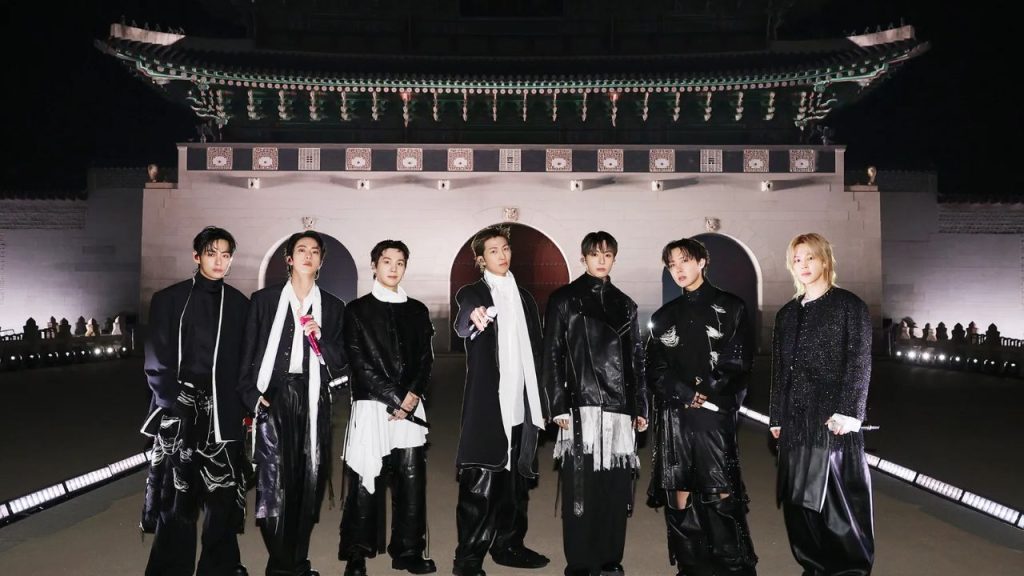
There’s a coda here that’s harder to read. In early August, BTS performance videos disappeared from the Grammys’ YouTube channel and website while remaining on BTS’s own channel. Neither the Recording Academy nor HYBE has explained it. Some observers place the takedowns before the boycott was announced, and it’s possible the request came from BTS’ side. So I won’t call it retaliation. What I will say is that an institution currently insisting it wants to expand who gets recognized has said nothing, for days, about why some of the most-watched performances it ever aired are no longer on its channel. Silence is a choice too.
BTS didn’t have to do this. The better strategic play was sitting right there: submit, take a nomination in the new category, win the first one, and let the trophy be the argument. Instead they made the point nobody should have to make, and made it at their own expense. As they put it, they hope “music can be heard and loved for what it is, rather than being divided by region or language.” That’s not a demand. It’s barely even a complaint. It’s a description of what an awards body is supposed to already do.
The rule is fixable. The Academy revises its rulebook every year. It could drop the language requirement, or widen the category to admit Asian pop that isn’t sung in an Asian language, or state plainly how the new category interacts with the general fields. It has chosen none of those. So the 69th Grammys will go ahead with an Asian pop category and without the group that made it necessary, and whoever wins it will be handed a question along with the trophy. Until the Academy answers it, BTS’s absence is going to be the loudest thing in the room.



Follow Us