
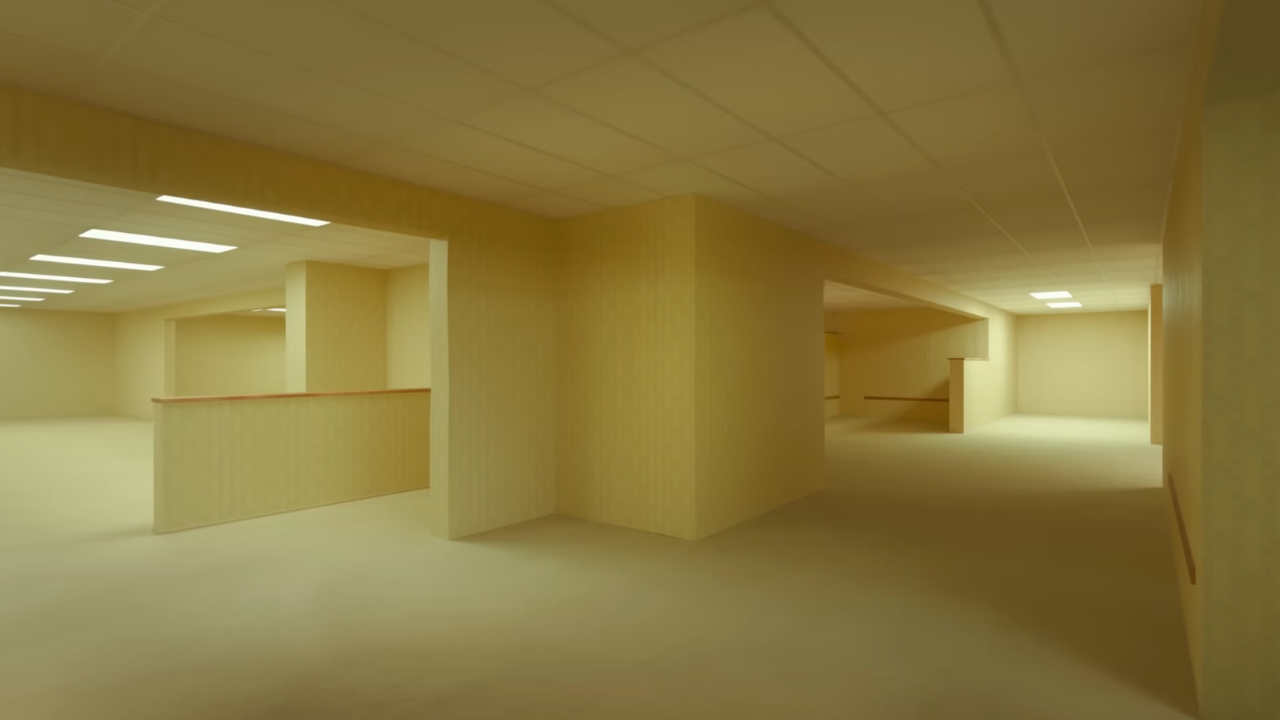
When I went to see Backrooms with two of my best friends, we were buzzing. The film was directed by a 19-year-old, and for weeks my group chats had been a steady stream of posts and messages about it — so I walked in expecting a crowd my age, and Kane Parsons’s. Instead, the theatre was full of kids. I wasn’t entirely shocked, given how much of an internet fixture the Backrooms is, but after all the marketing, I was curious how they’d handle a slow-burn psychological horror.
The row in front of me was filled with a group of kids no older than fourteen. They were talking during the previews, but I was willing to let that slide because the movie hadn’t technically started yet. But right off the bat, despite the very large “no photography/videography” notice that had appeared on the screen seconds before, one of the kids started filming. She unashamedly recorded the entire opening sequence. It appeared as if she was waiting for the title card, but gave up and put her camera down when it seemed to take forever to appear. Her phone, however, made a reappearance during the scene where Clark first enters the backrooms. She proceeded to take multiple photos, no doubt to post as an Instagram story to prove to people that she was there and that she actually “saw the thing.”
She wasn’t the only offender. Throughout the film, the kids were a massive disruption who would not stop talking (except one, who was asleep the whole time). They kept fighting over the communal popcorn they’d bought, and at one point, the debate got so heated that a kid hoisted the box above his head like Rafiki holding up Simba, blocking an annoyingly large portion of the screen. That was clearly the final straw for the man directly behind them, who delivered a resounding shush. It quieted the shenanigans, but only temporarily — before long the noise crept back up, until one of the friends in the group finally snapped and told them all to “shut up!”
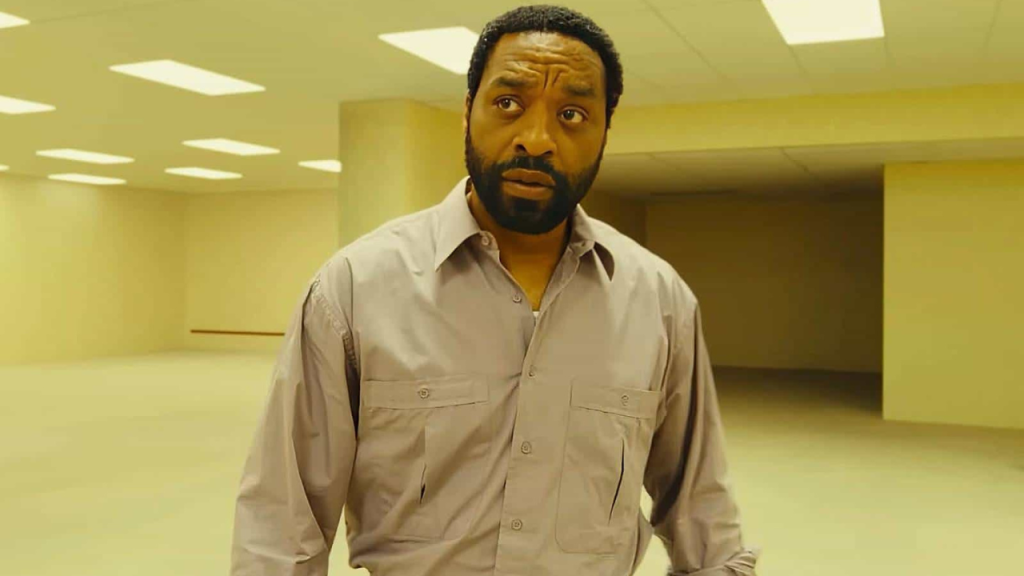
Maybe part of me should have expected this. The Backrooms began in a niche corner — a single 4chan post — but has since cemented itself as an internet staple. From that creepypasta came not just Parsons’ web series, but a flood of memes and multiple video games that gained serious traction on Roblox and Fortnite, drawing in exactly this young crowd. But here’s the thing: as much as they think otherwise, Gen Alpha is not the target audience of the Backrooms. The film takes on the sinister, eerie tone of the shorts — which makes sense, given it’s a direct extension of the world Parsons has spent years building on YouTube. But these kids’ introduction to the Backrooms wasn’t Parsons’ videos. It was the game playthroughs. And what’s integral to those? Dramatic “I’m freaking out” reactions from the streamer; because a horror reaction video with no reaction isn’t much fun. That makes perfect sense for the medium. The problem is that these kids have grown so accustomed to those loud, view-baiting reactions that they’ve started mimicking them in the theatre.
But is that necessarily their fault? This generation never received cinema etiquette training the way we did — not to the point where it’s ingrained. Movies aren’t the medium they grew up on; videos and streams are, and that’s one more thing the pandemic quietly took from them. They’re used to consuming media at home, where a movie is often a second thought playing in the background while they look at another screen. And even the streams they watch are usually just background noise to something else. So when they walk into a Backrooms screening, two problems come with them. The first is the bad behaviour we’ve all clocked, again and again, and not just at Backrooms: the open chatting, the obliviousness to the theatre as a public space, the constant phones. It’s the clear product of an education these kids never got, and it has plagued every cinema hall since the pandemic.
This isn’t to say phone use is unique to Gen Alpha — it’s crept into adults too, as watching a film alongside a second screen at home became normal. But what’s most frustrating is the blatant disrespect, possibly not even conscious, in kids straight up recording bits of the film to post online. It’s disrespectful to the other people in the room, and to the art itself. Since Backrooms premiered, bootlegged clips have flooded TikTok and Reels and been chopped into memes, racking up millions of views without the slightest attempt to hide that the footage was illegally taken. Given how much of it is out there, no wonder these kids shrug off the anti-piracy disclaimers before the film — they’ve seen the clips already, so what are the odds anyone stops them? Plenty of them sneak in below the age rating in the first place, so the same flippancy carries right through to taking out a phone and recording in plain sight. And as concert culture trains everyone to document everything, the “I need to record this to prove I was here” instinct has bled into the theatre — in direct defiance of one of its oldest rules.
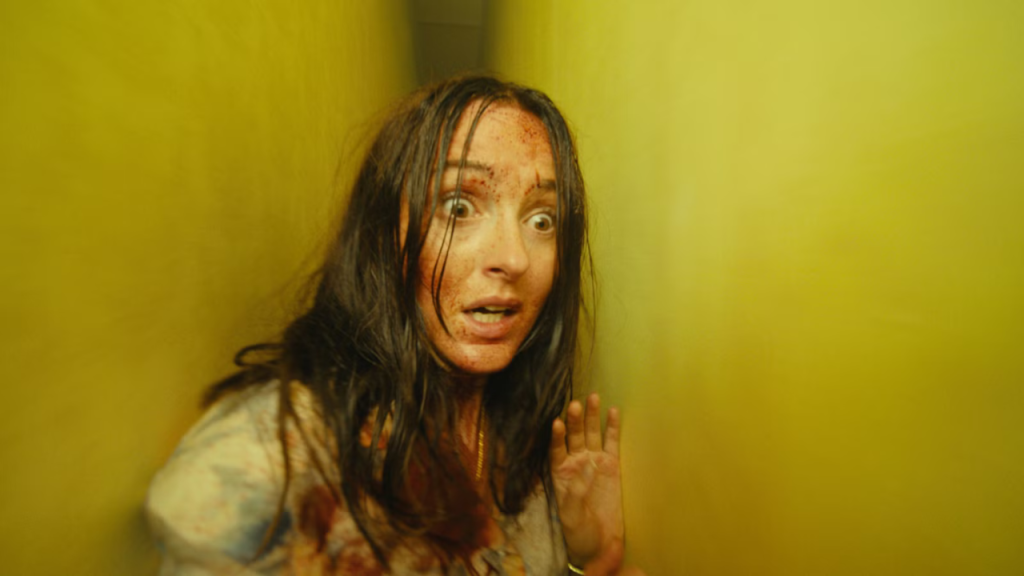
The second problem is the recreation of the big reactions they’re used to seeing their favourite streamers have. I went around asking friends about their own Backrooms screenings, and quickly realised my experience wasn’t unique. One told me a row of boys sat directly behind her were so loud that “every time there was a jumpscare they would scream so loud, making it scarier than it was.” Another said the group behind him was “rowdy and not really engaged, poking in with random remarks and chuckles at the worst times.” Because commentary-over-content media has exploded in popularity, people now carry that instinct into the cinema with them. I’ve nothing against commentary — it’s a big chunk of my own YouTube diet. But that commentary is made in private and put out for people to watch on their own time, not performed live in a public room. There’s now a constant need to be “funny” in the theatre — to elicit reactions to your reactions, to get people laughing at you laughing at the movie. And even if the first crack lands, every one after it lands a little less, until it stops being funny and just becomes a nuisance.
But then this got me thinking: wasn’t going to the theatre meant to be a communal experience? And if there’s one genre where that’s most true, it’s horror. No one wants to be scared alone. Even if you go by yourself, buying a cinema ticket means choosing to be scared in company — just not people you know. You’re there for a sense of community.
But theatres now seem split into two camps: people who think they’re entitled to talk because they paid for the ticket, and people who think they’re entitled to the experience they signed up for — which, for as long as anyone can remember, has been quiet company. There’s a right answer here. At its core, the theatre is a public space. You buy a ticket to sit with a community, not to carve out a private box for you and your friends.
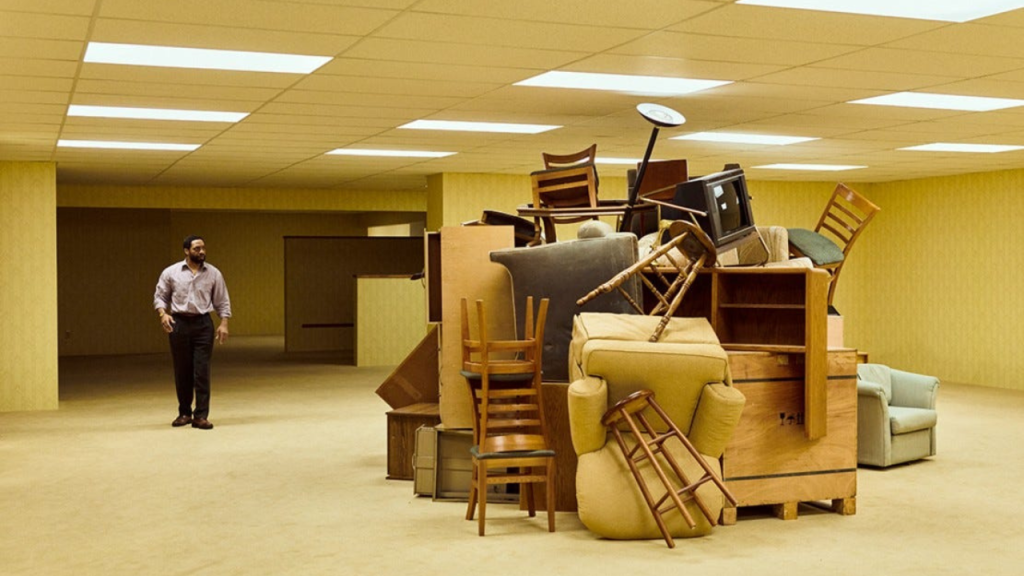
Part of me feels bad complaining about children this much, because a lot of this genuinely isn’t their fault — they couldn’t control the pandemic. But the stubborn, repeated failure to register that other people are in the room starts to wear you down. And I’ve realised that both problems they bring into the cinema stem from the same place: these kids have never had to exist in an environment they don’t control. They’re not used to sharing space with anyone beyond family and friends. They make themselves at home in the theatre because they’ve never had to be anywhere that wasn’t home. And when outright lawbreaking happens in plain sight, alongside that blatant disregard for everyone around them, it’s clearer than ever what all that control has curdled into: entitlement.
Sympathy wanes after a realisation like that, and you’re left with the question: have we become too lenient? The pandemic took this etiquette away, but nothing says we can’t put it back. Right now, the only people I know who’ve had a decent Backrooms screening went at odd hours — and it isn’t fair that respecting the rules should mean hiding from everyone who doesn’t. “You do you, I’ll do me” might pass as a philosophy everywhere else, but bring it into a cinema and it stops being live-and-let-live. It becomes a wrecking ball.
A movie screening isn’t a private show. We aren’t here to watch you, or to find out how funny you are. We’re here to watch the film in quiet solidarity. That’s the backbone of the cinema experience — and it’s starting to crack. It’ll keep cracking if we let it.





Follow Us