

After burning down the trading floor at the end of Season 3, Industry now faced the biggest challenge there is: total and utter reinvention. What seemed to be a natural endpoint for showrunners Konrad Kay and Mickey Down turned into an opportunity for them to elevate this series into something beyond just another high-brow TV show about finance. With the first three seasons being heavily inspired by the showrunners’ real-life stint in banking and finance, a pivot so large usually means only one thing: shameless cash grab. It should be, in theory, catastrophic. What do you do now that your entire governing premise is gone? Pierpoint was the heartbeat, the raison d’être of the entire narrative, so how do you keep audiences engaged when there’s no monstrous organization looming over everything, no corporate machinery grinding people down?
The answer, it turns out, is by going somewhere entirely darker.
At the end of Season 3, Pierpoint has been bought over by Al-Miraj, who, in an attempt of “ethical investing,” furloughs the entire London trading floor. Gus is gone. Eric has been asked to retire. Rob has left for California. Yasmin leaves finance entirely and relishes life as the bride-to-be of aristocrat Henry Muck. Harper, hungry as ever, starts her own short only fund. So where does the show go from here?

Season 4 introduces us to Tender. A payment processing platform operating in the grey zones of gambling and pornography, now pivoting under the stewardship of its CFO Whitney Halberstram (played by the chilling Max Minghella), to reinvent itself as a legitimate bank. When Harper’s fund sets its sight on Tender, what begins as a short position unravels into something darker that threatens the trajectory of every character.
What’s impressive is how organically the returning cast has grown into their circumstances. Once known for sex, drugs, and hedonism, the electric colours and youthfulness of the show’s atmosphere in Seasons 1 and 2 are now mere afterthoughts. It would seem that the characters are aging with the show – and now, leaving their wild and free twenties behind. Eric, now retired on his Pierpoint severance, eventually finds his way back into his mentee’s orbit, with the two launching SternTao, a fund liberated from Otto Mostyn’s political (and aristocratic) will. Yasmin, pulling the strings of her husband’s floundering political career from behind the scenes, is on a trajectory toward something genuinely monstrous, launching the family into Halberstram’s web of deceit. Rishi, as usual, is always having the worst day of his life.
It is the intrinsic nature of these characters, and who they have grown into that propels the season forward, not their circumstances. The contexts may have shifted. The people, however, have not.
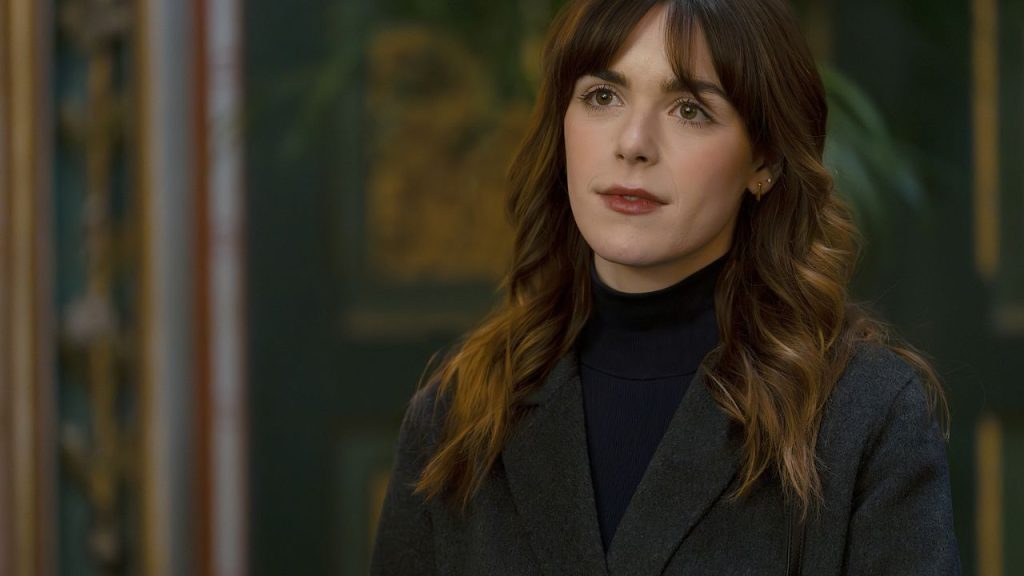
At the centre of it all, as it always has been, is the Harper-Yasmin relationship (or as I like to fondly call them, Yasharper). The duo have always had a rocky relationship – best friends turned rivals, fuelled by betrayals, and then sexual tension. And it is in Season 4 where that tension reaches its most punishing form. They are now on opposite sides of the Tender trade. Harper wants the company completely decimated. Yasmin, now stuck within it through Henry’s role as CEO, needs it to survive. And yet, somehow, none of this cancels out the magnetic intimacy that hums in the air between them. The season ends with an electrifying finale that completely recontextualises Yasmin’s character while feeling entirely probable for her arc.
What Industry has always done better than most of its peers is trusting its own intelligence. No moment overstays its welcome. No messaging is hammered onto your face. Having lost its investment banking spine, the show (deftly) pivots into an examination of the technocracy that quietly governs democracies. It doesn’t flinch from real-life headlines, grounding it in a realism that makes the show feel more present than ever before.
And nowhere is that realism sharper than in its politics. Season 4 is, beneath everything else, an intensely political show, and it isn’t afraid to wear that identity proudly. Otto Mostyn’s seat in the House of Lords, a new MP lobbying for Tender’s regulatory approvals, and the texture of a Labour government navigating the uncomfortable synthesis of old money and new tech – all of it lands with a distinct specificity that feels like a live dispatch rather than just a dramatic backdrop. Most prestige dramas mistake topicality for depth, but at a moment where the relationship between political institutions and new technologies is one of the most defining anxieties of British public life, Industry is entirely unafraid to map that terrain in real time. It may not have the bank setting to follow the markets, but it definitely has access to the politics that govern it.

The early episodes do ask for some patience as the show finds its footing in a new light. Longtime viewers will be sceptical, and the introduction of Tender and its entanglement with SternTao will initially read as a mishmash of ideas with no real place to go. But Industry has earned a degree of trust, and by Episode 3, the direction and shape of the season gets bludgeoned into focus. This is still a show about the industry, but now without the bank, Kay and Down are able to refract it through a wider, more sinister lens.
The season is a corporate thriller that delivers on every front – heart pounding drama, corporate espionage, (many) quick trips to Accra, the aristocracy, forensic accounting, sex, drugs, Daft Punk’s Veridis Quo pulsing through a club, and also, glory holes. For a show that completely burned its house down, what it has rebuilt is sharper, darker, and entirely in a class of its own.




Follow Us