
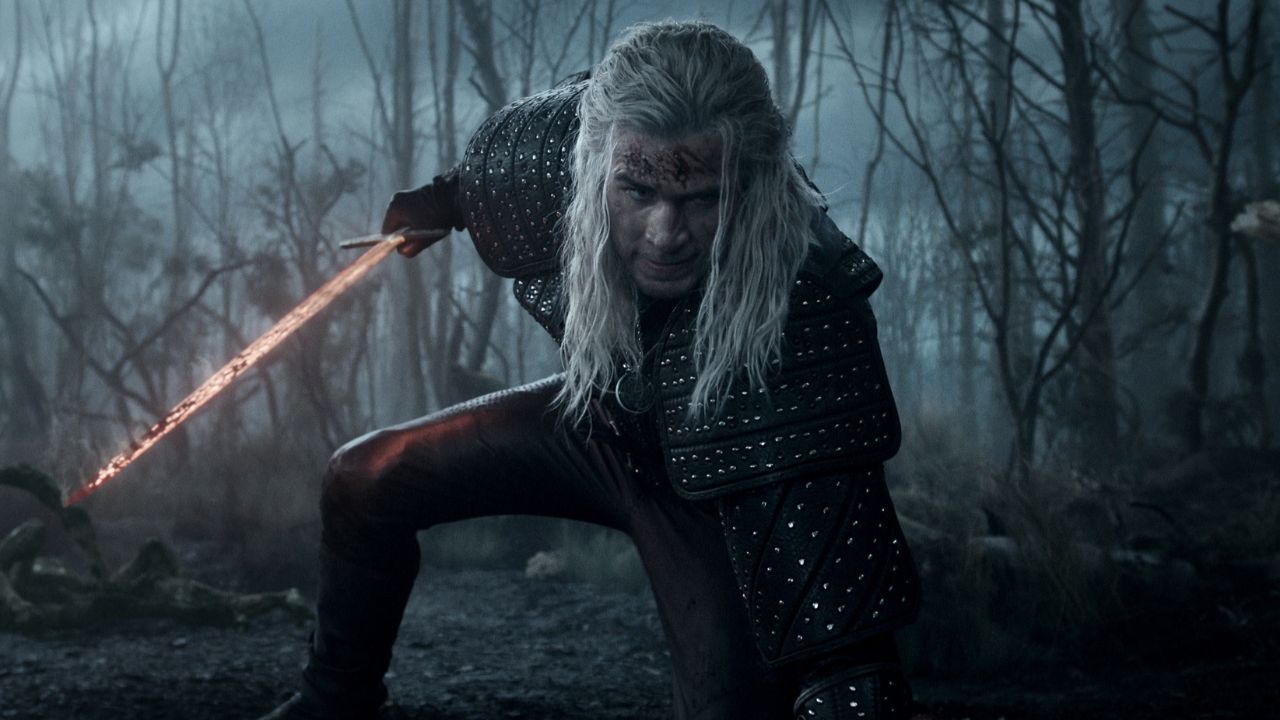
Anger a fandom and incur their wrath. Just ask Lauren Hissrich, showrunner of Netflix’s The Witcher. Since the start, Hissrich has been hotly criticised for her creative choices on Andrzej Sapkowski’s beloved franchise. From backlash over casting, to criticisms of the pointlessly confusing timelines in Season 1, Hissrich has been flayed by the fans. But before Season 4 even arrived, the most intense controversy yet reared its head like a wraith: the recasting of the White Wolf himself.
Many fans swore to boycott the series after Henry Cavill laid down his medallions and sword and Liam Hemsworth picked them up. The loss of Cavill was painful; he embodied Geralt. But I was determined to watch Season 4 without prejudice. After all, it wasn’t Hemsworth’s fault. Someone had to fill Geralt’s boots. And once you get over the uncanny valley effect of seeing another face under the White Wolf’s wig, the change was easy to accept.

Hemsworth said in interviews that he didn’t want to copy what was done before but find his own way with Geralt. I respect that. Hemsworth’s Geralt is lighter than Cavill’s in all aspects. Hemsworth’s sleeker build means he’s lighter on his feet during fight scenes compared to Cavill’s bulky physicality. And where Cavill’s Butcher of Blaviken was darkly brooding, Hemsworth’s is softer. After everything he’s been through, this change was a natural emotional progression for Geralt.
Like the Witcher himself, Season 4 was much lighter. The convoluted political intricacies and diplomatic relations of the Continent that so entangled previous seasons were trimmed. Season 4 harked back to Season 1 by splitting Geralt, Ciri, and Yennefer, and giving each their own storylines. Geralt finds himself with an unexpected collection of friends and foes, old and new. There’s a wholesomeness to Geralt now as, together with his gang, the Hanza, he faces a different monster-of-the-week in each episode.
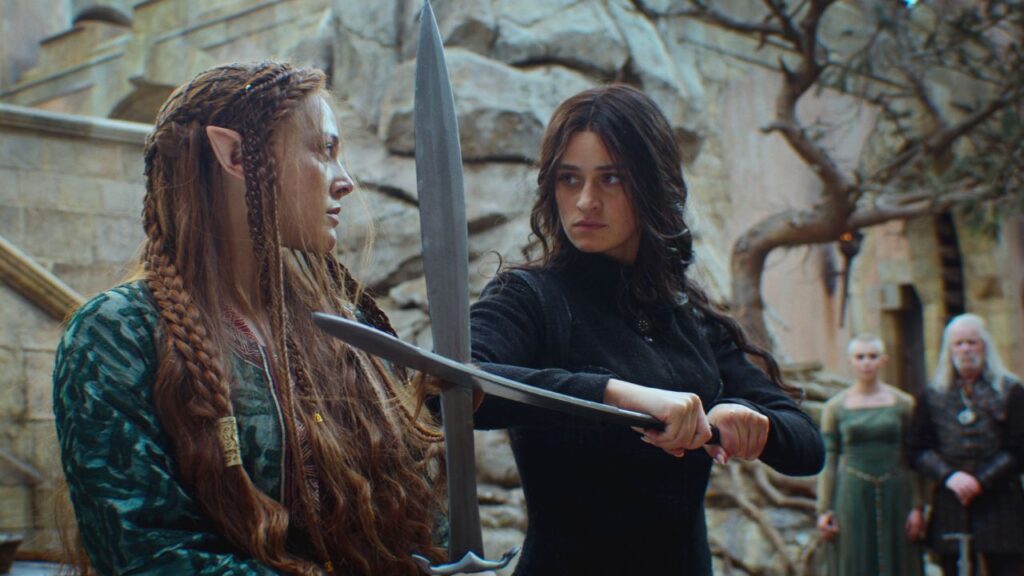
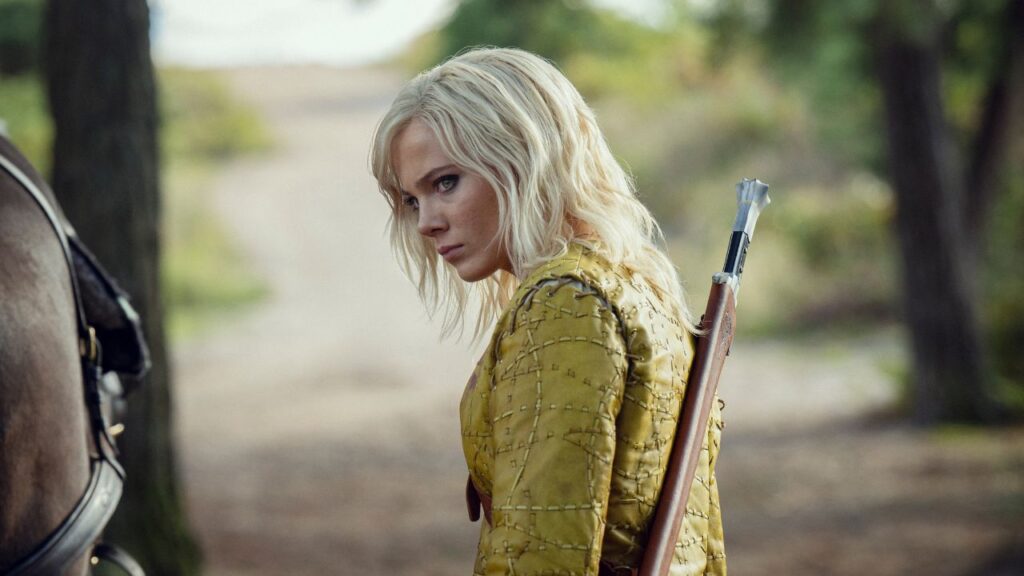
Ciri’s storyline, meanwhile, was so boring it hurt. Assuming the alias Falka, Ciri joins a band of thieves called the Rats. The Rats were paper-thin (I barely remember their names), the actors’ performances were middling, and their Ocean’s heists were lame. The relationship between Ciri and Mistle, insidiously exploitative in the books, was sanitised into a saccharine, made-for-TV romance. While the Rats sank Ciri’s storyline, we can thank bounty hunter Leo Bonhart for doing some much-needed pest control in the finale.
But it was in Yennefer’s storyline where the failures of the writers were most glaring. This storyline had explosive potential: Yennefer must lead the surviving sorceresses against Vilgefortz and his army at Montecalvo. Instead, we get a montage of the sorceresses training that looked like Sky High; except Sky High was fun. Worse, the rich relationships between characters that had been built over the past seasons were glossed over.
Why bring back Francesca, with all her pain and rage, only for her to play a supporting part? Why include the other witchers like Vesemir, Coen, and Lambert, only for them to be background fodder at the battle of Montecalvo? Why not mine the emotional depths in the relationships Yennefer has with Vesemir, Francesca, even Triss? We know the writers aren’t incompetent with exploring emotional relationships – they developed Cahir and Geralt’s bond. The sloppy handling of characters here exposes the inconsistent storytelling that continues to hobble the series.
Then take the fifth episode of Season 4, “The Joy of Cooking.” Here, Geralt’s Hanza sit around a campfire, cooking and sharing personal stories. Their flashbacks are told through musicals and animation. For taking a creative risk, I applaud Hissrich’s team. This resembled those special episodes the CW did. Except that the CW’s specials were coherent wholes. “The Joy of Cooking,” while trying to be joyous, ends up being a potluck of styles and genres whose separate ingredients don’t quite gel organically.
For those who refused to watch Season 4 because of the casting change, Liam’s performance is decent, as is Season 4 on the whole. In some ways, it’s even an improvement. But decent isn’t enough to justify what Netflix spends on the franchise. (Debuting very quietly alongside Season 4 was the newest spin-off, The Rats: A Witcher Tale. Wasn’t an entire season with them more than enough?)
Hissrich would do better to focus her energies on improving The Witcher rather than spreading herself too thin with satellite projects. It’s a relief that Season 5 will be the last, although will anyone be left watching? Like its titular character, The Witcher continues limping. Unfortunately, unlike Geralt, the series doesn’t have a friendly vampire to heal its injuries.




Follow Us