
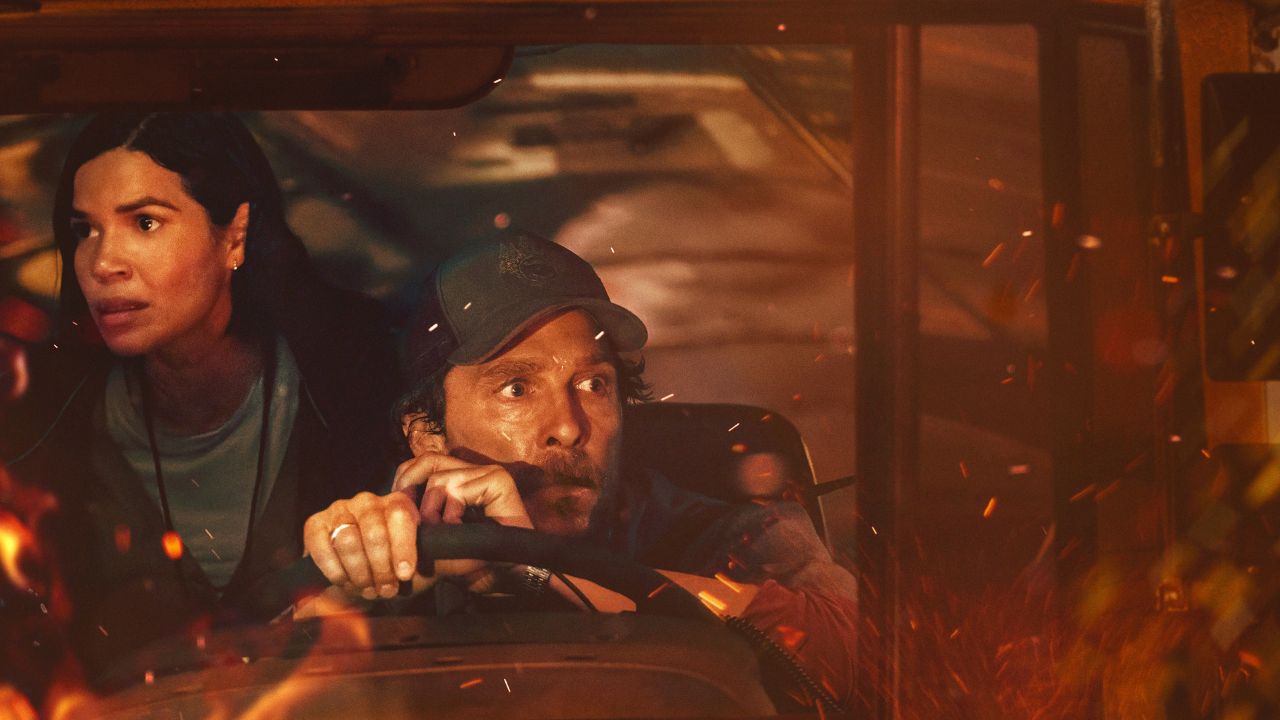
Even though The Lost Bus is set in 2018, all through the film I couldn’t help but feel a distinct sense of the past. The feeling came partly because of director Paul Greengrass’ cinematographic style, reminiscent of the epic natural disaster blockbusters of the 90s like Dante’s Peak and Volcano. Part of it was also because Matthew McConaughey’s portrayal of bus driver Kevin McKay offers something that has become rare in contemporary Hollywood: a complex, white, working-class hero.
The Lost Bus is based on Lizzie Johnson’s book, Paradise: One Town’s Struggle to Survive an American Wildfire. In 2018, a monstrous wildfire broke out in Butte County, California. The flames were caused by a faulty electrical line owned by the Pacific Gas and Electric Company. The fire destroyed much of the town of Paradise, killing over 80 people. The death toll would have been higher if not for Kevin McKay, a bus driver who rescued 22 school children by literally driving them through fire.
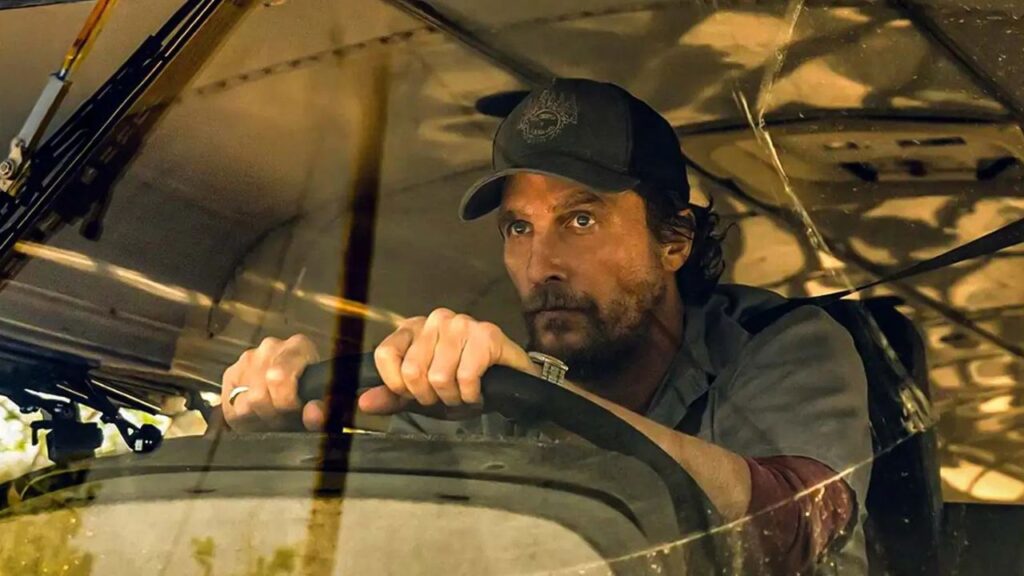
Disaster movies only succeed when the audience cares about the characters before the disaster strikes. And audiences can only care when the characters are first fleshed out. Director Greengrass understands this. Greengrass spends time building Kevin’s homelife, making him someone we can connect with; a single father carrying the weight of the world on his shoulders as the sole caregiver for a sick mother, a difficult teenage son, and a dying dog.
Although Kevin McKay is played by Matthew McConaughey, the actor’s trademark alpha male charm has been deliberately stripped away. Kevin is an ordinary working schlub, trying to pay the bills and not get fired from his new job bussing kids. Greengrass dives deep into the life of a man battered relentlessly by personal and financial challenges. This is modern manhood and fatherhood under duress, but it is neither fragile nor toxic.
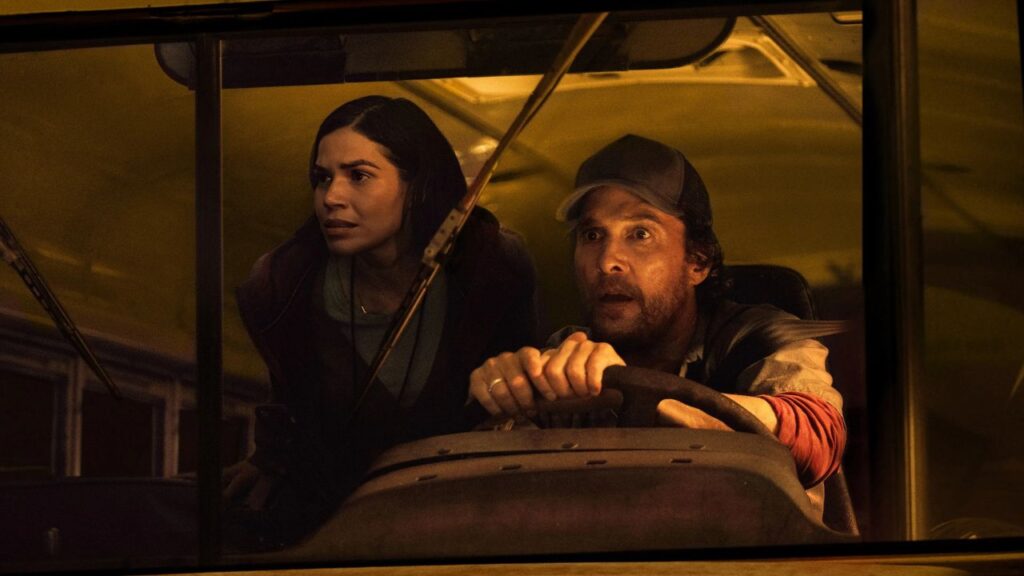
As a father, Kevin wants to genuinely to connect with his son, Shaun, on an emotional level. He knows the damage to young men that comes from absent and disappointed fathers, having himself burned bridges with his own father. His struggles to connect across the divide are even more poignant considering that the actor playing Shaun is McConaughey’s own son, Levi. But just like the wildfire, generational trauma can smoulder unseen, ready to ignite.
It’s only when Kevin must literally answer the hero’s call to rescue a group of schoolkids that he is confronted with the ultimate test of fatherhood and personal sacrifice: does he help his own sick son or other people’s children? McConaughey eschews tough-guy stoicism, playing Kevin with tenderness and vulnerability, which is the man’s true superpower. Faced with an inferno and a bus full of scared children, he connects with a little boy called Toby who longs for his daddy.
Where other filmmakers strive for gender-neutral or even explicitly feminist perspectives, Greengrass embeds masculinity, not just thematically, but also in the cinematography of The Lost Bus. Greengrass has used his signature shaky cam style in other films like the Bourne franchise and Captain Phillips, but here, the quick cuts lend a frantic, kinetic disorientation that captures the fevered threat of the wildfire. The freestyle cinematography is grittily masculine, resisting the perfectly polished cinematic products Hollywood so favours.
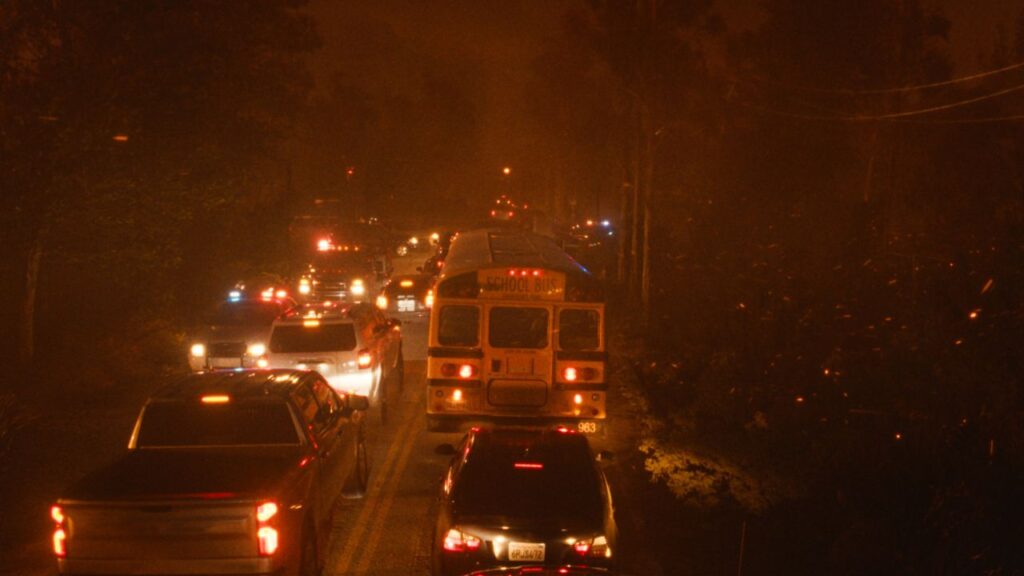
Meanwhile, the apocalyptic visuals of The Lost Bus are stunning. It isn’t just fire but wind that’s the enemy, something Greengrass captures in his aerial shots. As the camera swoops over the blazing hellscape, seemingly on the howling winds, you get an eerie sense that the fire itself is alive. As the flaming clouds chase the bus, Kevin inherits the wheel from his cinematic predecessors, from Brosnan out-driving a deadly pyroclastic cloud in Dante’s Peak, to Keanu and his rigged bus in Speed.
Fire destroys but also purifies. Symbolically, Kevin reunites with Shaun in the ashes of their home. The fire that destroyed Paradise also provides healing for father and son – Kevin’s courage redeems himself in his child’s eyes, and in his own. The crisis of masculinity that is endemic in America today, especially among working-class men, here intersects explosively with the twin crises of the environment and economy. Kevin’s story is not just the classic tale of man versus nature, but also man versus himself. The Lost Bus proves that the working-class Joe can still be a hero of mythic proportions.







Follow Us