
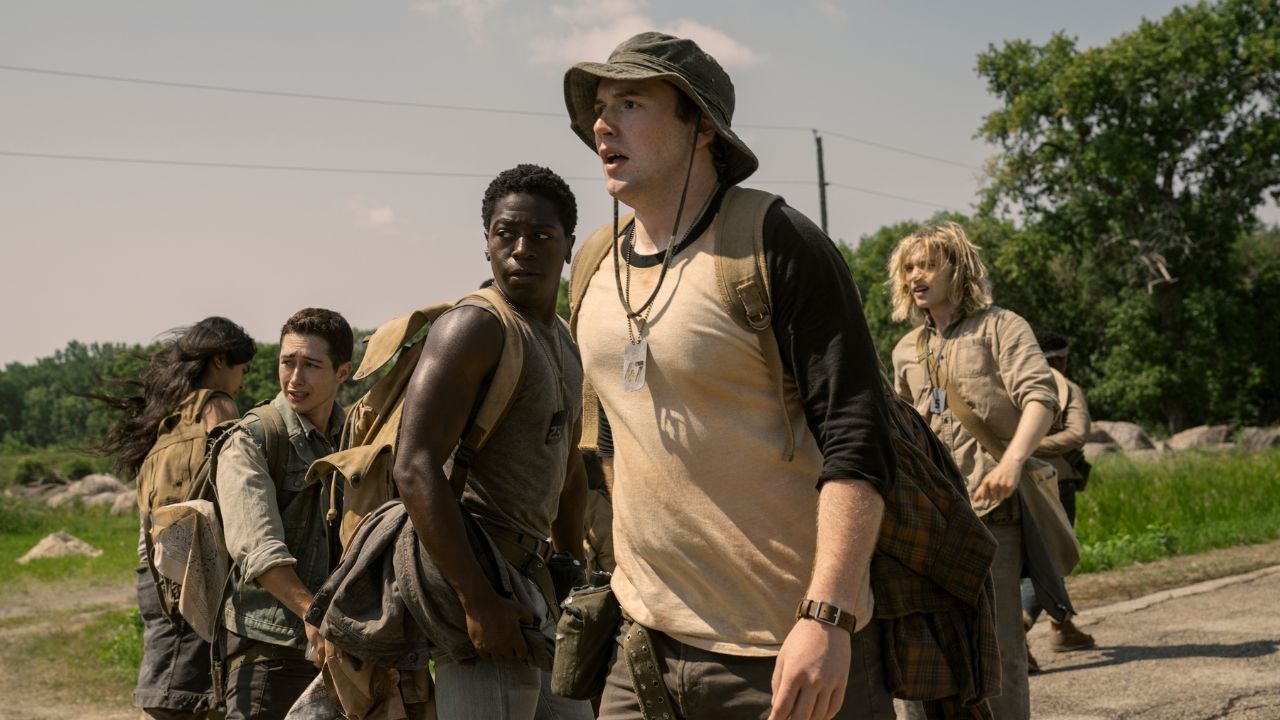
I’ve always admired Francis Lawrence for doing something rare in actually adapting a movie that’s better than the book: he directed all but the first movie in the Hunger Games franchise. He took Suzanne Collins’ trilogy, which was exciting, sure, but lacked storytelling grace, and made them shine onscreen. So when I heard Lawrence was directing Stephen King’s The Long Walk, I was cautiously optimistic: could he catch lightning in a bottle again?
Or would we get a sanitised, YA road trip version of Ray Garraty and his friends? Adding to the challenge was The Long Walk’s reputation as one of King’s most unfilmable books – its largely conversations between the boys and Garraty’s fragmented, tortured stream-of-consciousness, as he descends into the hell of his own mind to escape the road.
Lawrence clearly understood the assignment.
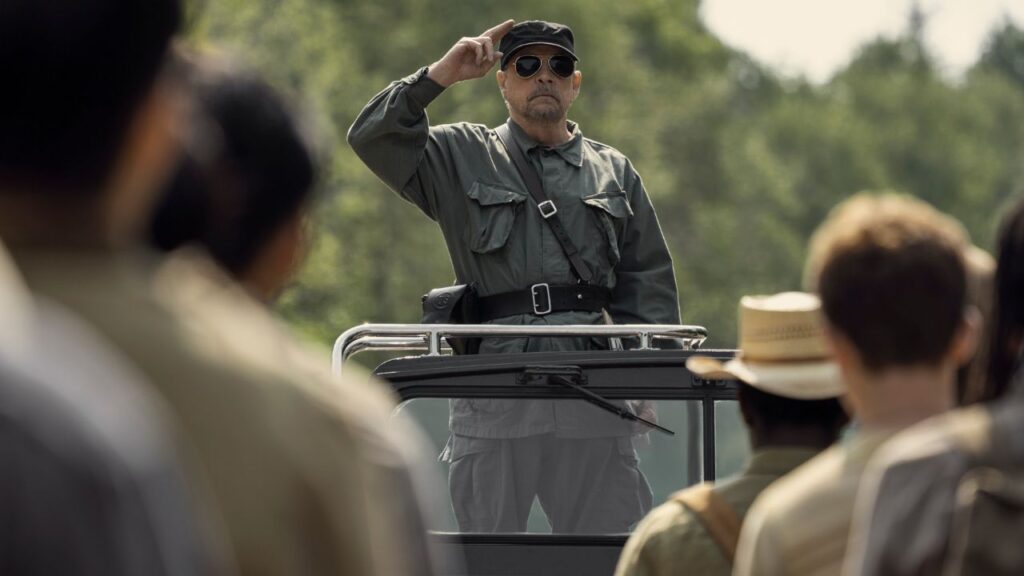
The Long Walk is every bit as brutal as King imagined. Lawrence denies the audience the comfort of looking away. When the boys die, we see everything. But Lawrence also clearly grasps that King always finds the heart in the horror. Lawrence preserves the male friendships that gave the book beauty amid bleakness. In fact, the compassion and camaraderie between Garraty and Peter McVries is even more intense and important onscreen.
Of all the characters, McVries was the most changed. In the book, he was sardonic and occasionally cynical. Book McVries joined the “Walk” because he was suicidally depressed after a breakup. Although he becomes Garraty’s best pal, he maintains an opaque distance. And while he repeatedly saved Garraty’s life, he finally declares he won’t help again. And when he can’t continue walking, he just sits down to die.
Lawrence elevates McVries into a force for good in the movie. David Jonsson plays the character with a cheerful, open-hearted goodness. Jonsson’s McVries wishes to help children who’ve had a hard life like himself. He reminds Garraty to find the beauty around them while they’re still breathing. When Garraty shares his plan to use his wish to request a rifle to kill the Major and avenge his father’s death, McVries urges him to choose forgiveness. The profound friendship between the boys made the surprise twist hit harder: Garraty sacrifices himself so McVries can win.
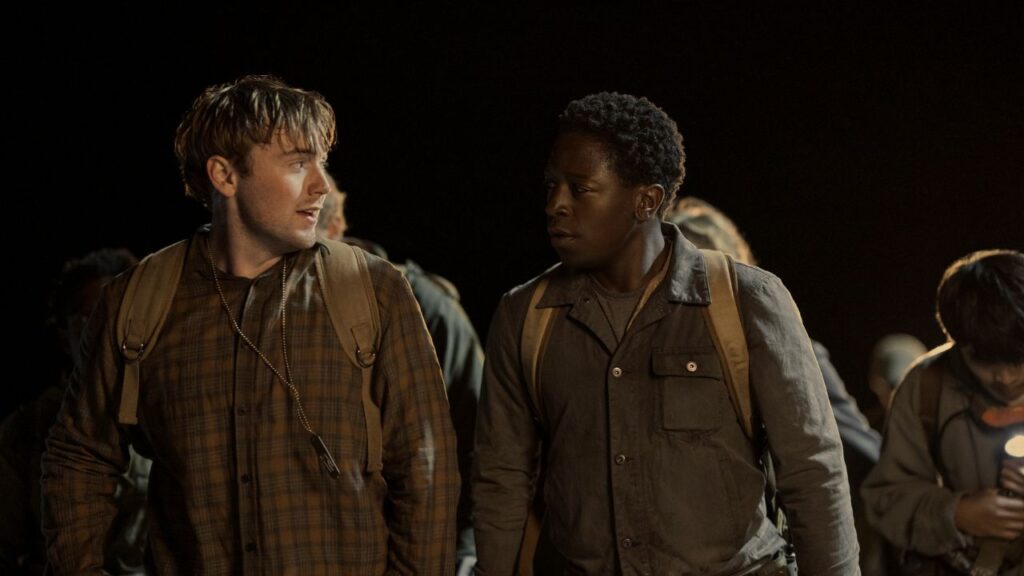
I’m all for directors changing endings if it opens new dimensions. But I was troubled by McVries winning and the wish he makes – because he’s Black. While I loathe to make this about race, its unavoidable. King was sparing with physical descriptors of the boys’ ethnicities. Lawrence has a more rainbow-coloured cast, reflecting contemporary sensibilities of inclusivity. No doubt casting Jonsson, who is Black, as McVries, was a deliberate decision. Lawrence and the folks at Lionsgate probably felt good at having McVries emerge victorious. But I wonder if they fully grasp how troubling the optics and politics actually are?
See, after McVries wins, his grief pushes him to change his wish to honour Garraty. He asks the Major for a rifle and shoots him dead. I sense that in this ending, Lawrence, with good intentions, was trying to break the “Black helper” trope that has dogged White/Black friendships in American fiction since the days of Jim and Huck Finn. Superficially, by having McVries win instead of Garraty, Lawrence thought to liberate the subservient Black friend, who is always a loyal helpmeet to the White hero, and makes him the victor.
But McVries wins only after (or because?) Garraty, who is white, quits. More insultingly, it was McVries who first stopped walking to save Garraty, only to have Garraty copy him moments later. McVries has no agency – his heroism is stolen by Garraty and he is forced to win against his will. Worse, because McVries changes his wish, he ultimately perishes in service to Garraty. His optimism and compassion are corrupted, and he dies as a Black man committing an act of violence counter to his pacifist nature, all for his White friend.
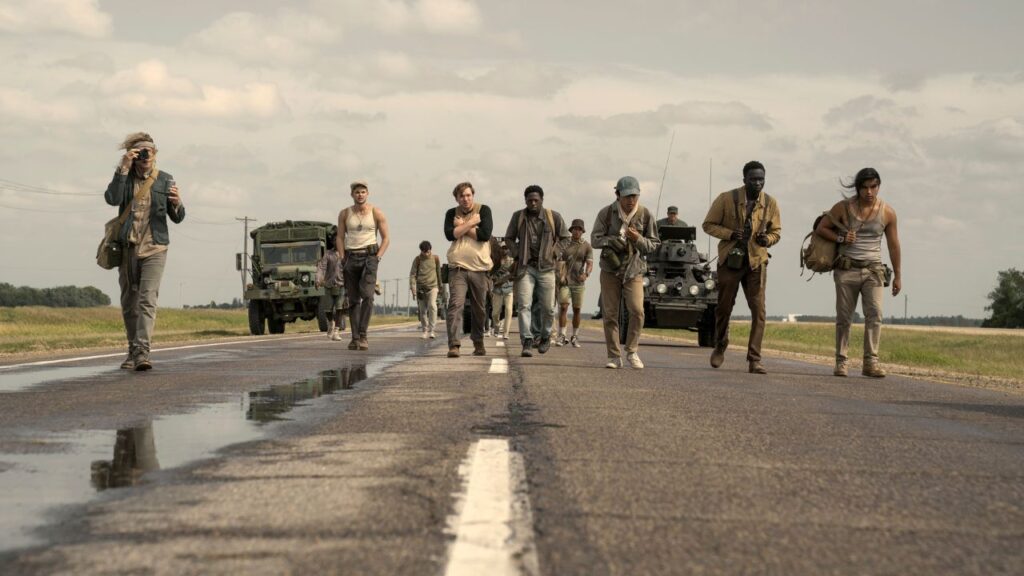
Moments after killing the Major, everyone vanishes and McVries finds himself alone. Lawrence manages to capture the novel’s famously ambiguous conclusion with this equally murky closing. Has McVries gone mad? Or died? Is this empty, endless road, hell? Is he condemned to walk forever?
Despite being the winner, McVries must suffer in the end, with no end in sight. Hollywood might’ve come far with race representations, but as The Long Walk proves, they’ve still got a long road ahead before filmmakers truly understand the nuances of race relations.

Follow Us